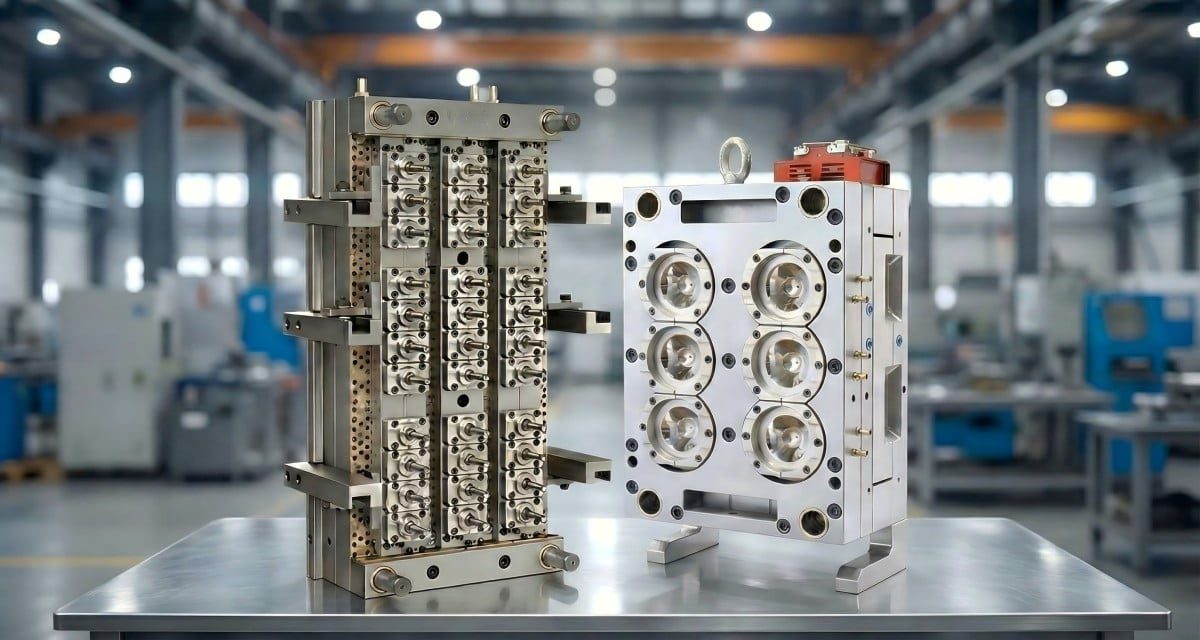
Are you struggling to decide between a 48-cavity or 72-cavity mold for your next project? Choosing the wrong configuration can destroy your production efficiency and waste thousands of dollars in investment.
The right cavity number depends on balancing your annual production targets with your injection machine's clamping force and shot size. You must calculate the required output based on 300 working days while ensuring your cooling capacity and auxiliary equipment can support the increased cycle speed.
Many manufacturers focus solely on price or maximum theoretical output, but this oversight leads to long-term operational failures. Let’s explore the eight critical factors you need to verify before finalizing your mold order to ensure a successful and profitable production line.
Analyze Your Annual Production Target First?
Do you know your exact annual demand, or are you just guessing based on market trends? Overestimating sales often leads to buying expensive, idle equipment that drains your cash flow.
Calculate your cavity needs by working backward from your annual target. Divide your total target output by 300 working days and 20 daily operating hours. This formula prevents over-investing in capacity you don't need yet and helps maintain a healthy budget.
When clients approach me, they often ask for the highest cavity number their budget can allow. They believe that more cavities equal more profit. However, I always advise them to pause and look at the real numbers. The first step in PET preform mold cavity calculation is to look at your sales forecast for the next two years. You should not just look at "output per hour." You must calculate backwards from your total annual demand.
Here is the logic I use with my clients. First, define your annual demand. Let's say you need 50 million preforms per year. Second, define your working time. We usually calculate based on 300 working days per year and 20 effective production hours per day (allowing 4 hours for maintenance, mold changes, and startup). Finally, use the formula: Annual Target / (300 days * 20 hours) = Hourly Output Required.
I see many startups make the mistake of overestimating early sales. If your annual demand is only 5 million pieces, buying a 48-cavity mold is a waste of resources. The mold will sit idle for weeks. In this scenario, I suggest splitting your budget. Instead of one large 48-cavity mold, buy two smaller 16-cavity or 24-cavity molds with different Neck Finishes (like PCO1810 and 29/25). This gives your production line flexibility. You can serve different customers without stopping a massive machine.
If you buy a high-cavity mold but only run it three days a week, your Return on Investment (ROI) drops significantly. The machine oil degrades, the seals dry out, and your capital is tied up in steel rather than marketing. Always match the cavity count to your realistic sales data.
Calculate the Clamping Force of Your Injection Machine?
Does your injection machine actually have the power to hold the mold closed under pressure? Ignoring clamping force guarantees flash issues, poor product quality, and potential damage to your mold.
Your machine must have enough tonnage to counteract the injection pressure. If your clamping force is lower than the projected area of the preforms multiplied by the pressure factor, the mold will open during injection, causing significant production defects.
This is the most critical technical constraint. You cannot cheat physics. The clamping force is the pressure the machine applies to keep the mold closed while molten PET is injected at high speed. If you select a 72-cavity mold but your machine only has 280 tons of clamping force, you will fail. The molten plastic exerts tremendous outward pressure. If the machine is weak, the mold plates will separate slightly. This creates "flash" (excess plastic) on the parting lines of the preform. Flash ruins the bottle finish and can jam your blow molding machine later.
I use a standard experience formula for PET mold manufacturing: PET preforms typically require 2.5 to 3 tons of clamping force per square inch of projected area. I often meet clients who bring me a quote for a 48-cavity mold from another supplier. They are excited because the price is low. But when I check their machine nameplate, I see it is only a 200-ton machine. I have to be honest with them. I tell them, "Even if I give you this mold for free, your machine cannot run it."
To avoid this expensive mistake, you must perform this calculation. First, calculate the area of one preform (facing the clamp). Second, multiply by the number of cavities. Third, multiply the total area by the factor (usually 0.3 to 0.35 tons/cm² depending on wall thickness). If your machine is on the borderline, do not risk it. Choose a lower cavity number. It is better to have a 32-cavity mold running perfectly than a 48-cavity mold producing scrap.
Shot Weight vs. Machine Injection Capacity?
Is your machine's screw large enough to fill all cavities in a single cycle? Insufficient shot size results in short shots, rejected parts, and inconsistent wall thickness across your preforms.
The total weight of all preforms plus the runner system must not exceed 85-90% of your machine’s maximum shot capacity. Exceeding this limit causes uneven plasticization, creates high Acetaldehyde (AA) levels, and reduces the structural integrity of the bottle.
Clamping force keeps the mold closed, but Injection Capacity (Shot Size) fills the mold. This is the second technical hurdle. Every injection machine has a maximum volume of plastic it can inject in one stroke. When you design a custom PET preform mold, you must calculate the total weight. Total Weight equals the weight of one preform multiplied by the number of cavities, plus the weight of the sprue and runner.
This point is vital for clients making "thick-wall" or "wide-mouth" jar preforms. These preforms are heavy. I have seen old machines that have high tonnage (clamping force) but small injection units (screw diameter). A client might want 32 cavities for a 50g preform. The total shot weight is 1600g. If the machine's max shot size is 1700g, you are at 94% capacity. This is dangerous.
You should never run a machine at 100% of its injection limit. First, the screw needs time and space to melt the PET evenly. If you use the whole barrel volume, the plastic at the back may not melt fully. Second, poor plasticization increases Acetaldehyde (AA) levels, which affects the taste of water in the final bottle. Finally, you need a buffer for cushioning. If you force a high cavity number on a machine with a small injection unit, you will get "short shots" (incomplete preforms). Or, you will have to extend the cycle time significantly to let the screw recover, which defeats the purpose of having more cavities.
Cycle Time Considerations: Cooling is Key?
Will more cavities actually give you more products per hour, or just more headaches? Without adequate cooling, a larger mold might run slower than a smaller one, reducing your overall efficiency.
Cooling dictates your injection molding cycle time. If your chiller cannot remove heat fast enough from a high-cavity mold, you must extend the cooling time, effectively canceling out the benefit of having more cavities and increasing energy costs.
Many people think: "More cavities equals Higher Output." This is not always true. The limiting factor in PET molding is almost always cooling time. PET enters the mold at roughly 280°C and must cool down to below 90°C to be ejected without deformation. As you increase the number of cavities, you concentrate more heat in the same volume of steel. If your external cooling system (Chiller) is weak, or the mold's internal water channels are not optimized, the heat stays in the mold.
I once served a water plant client in Africa. They insisted on buying a 48-cavity mold. However, their factory only had an old, low-power air-cooled chiller. When we started production, the water temperature was too high. To prevent the preforms from sticking or turning white (crystallizing), we had to extend the cooling time. The standard cycle should have been 14 seconds, but they were forced to run at 22 seconds.
Later, we calculated the math for them. If they had chosen a 32-cavity mold with an optimized cooling design, the cycle would have been 13 seconds. Mathematically, 48 cavities at 22 seconds produces about 104 preforms per minute. But 32 cavities at 13 seconds produces 147 preforms per minute. They paid more for the 48-cavity mold but got less output. This is the "Bucket Effect." Your output is determined by the weakest link, which is often the cooling system.
Preform Design Constraints: Length and Thickness?
Does the physical shape of your preform allow for high-density spacing in the mold? Long or thick preforms require specific layouts that often limit the maximum cavity count possible.
Physical dimensions restrict mold layout. Long oil preforms or thick 5-gallon preforms require more steel between cavities for strength, often necessitating a lower cavity count to prevent mold plate deformation and ensure long-term durability.
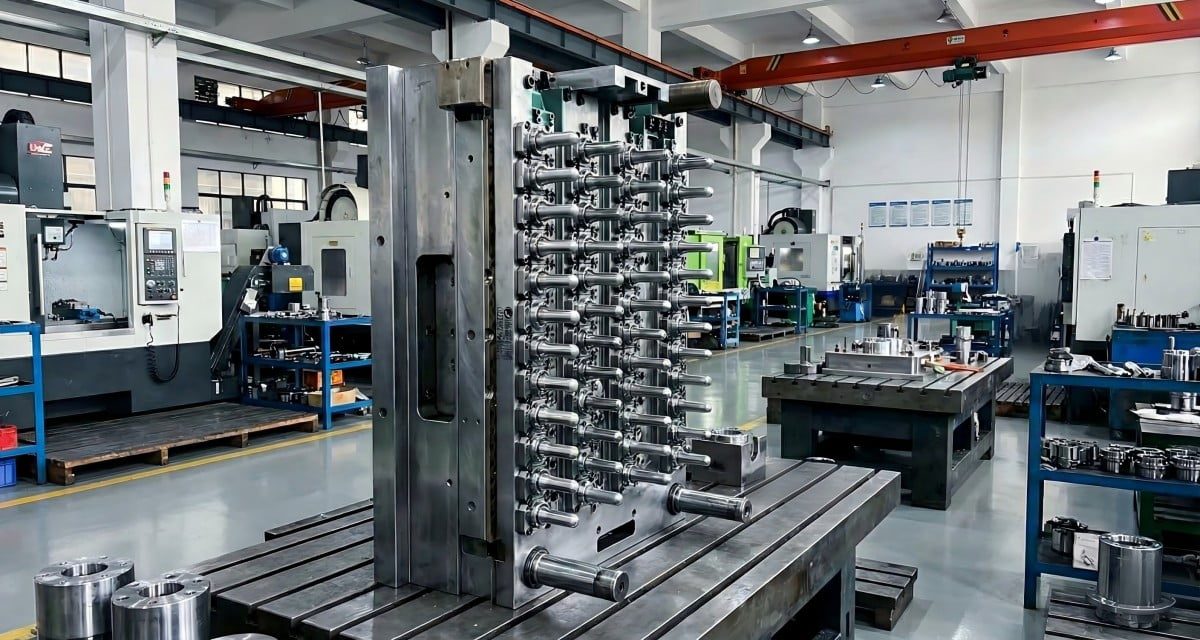
We must look at the physical geometry of your product. Not all preforms can fit into a standard 48 or 72 layout. This is especially true for special applications like Edible Oil bottles (long neck) or 5-Gallon buckets (thick wall). In PET preform mold design China, we have standard mold base sizes. There is a limit to how many cavities we can squeeze into a specific plate size while maintaining structural integrity.
As a mold manufacturer, I always balance "Cavity Density" with "Mold Strength." Between every cavity, there must be enough steel. If we make the walls between cavities too thin to add more holes, the steel will flex under high injection pressure (1000 bar). This flexing causes two serious problems. First, it causes eccentricity, where the preform wall thickness becomes uneven, leading to bottles bursting during blowing. Second, it shortens mold life as the plates crack due to metal fatigue.
For thick-wall preforms, I insist on reducing the cavity count. I advise clients to leave more space between the mold cores. Although we sacrifice a little theoretical output, we ensure that the preform Eccentricity stays within 0.1mm. High quality is always better than high quantity. A mold that produces bad preforms fast is just a machine that generates garbage fast.
The Hidden Cost: Auxiliary Equipment Upgrades?
Have you budgeted for the necessary upgrades to your support equipment before ordering? Doubling your mold cavities requires doubling your drying and handling capacity, which can be a massive hidden cost.
High-cavity molds consume material faster. You must upgrade your resin dryer, dehumidifier, and robotic handling systems to match the increased throughput. If you fail to do this, your expensive mold will sit idle waiting for dry material.
A mold does not work alone. It is part of a system. When you move from a 24-cavity mold to a 48-cavity mold, your material consumption doubles. This means your auxiliary equipment must also scale up. This is the "hidden cost" that many suppliers forget to mention.
When I quote a high-cavity mold, I always ask the client: "What is the capacity of your hopper dryer?" PET is hygroscopic. It must be dried for 4-6 hours before molding. Imagine you upgrade to a 48-cavity mold producing 300kg of preforms per hour. However, your existing dryer can only process 150kg per hour. The result is that the machine will run for 30 minutes and then stop for 30 minutes to wait for the material to dry.
You also need to check your Robot and Conveyor. Can the robot arm carry the weight of 72 preforms at once? Is the conveyor belt wide enough? True "cost-effectiveness" is not just about a cheap mold. It is about a high "match rate" for the entire system. If you buy a Ferrari engine (the mold) but put it in a tractor (the auxiliary), you will not go fast.
Maintenance Capabilities of Your Team?
Does your technical team have the skill to maintain a complex hot runner system? High-cavity molds require expert maintenance, and a lack of skill can lead to costly, extended downtime.
As cavity count rises, hot runner complexity increases exponentially. Without skilled technicians to balance temperatures and clean nozzles, a high-cavity mold can suffer from frequent blockage and quality inconsistency, negating any speed advantages.
This is a soft skill, but it is just as important as hardware. The complexity of a mold increases drastically with the cavity number. A 96-cavity mold has a massive Hot Runner system with complex wiring, multiple temperature zones, and tiny valve pins. If a 16-cavity mold has a problem, it is easy to fix. If a 96-cavity mold has a leakage or a blocked nozzle, it requires a highly skilled technician to disassemble, clean, and reassemble it without damaging the delicate components.
I had a new client from South America. He had plenty of capital but his factory was in a remote area. He could not easily hire experienced injection molding engineers. Originally, he wanted a 72-cavity Valve Gate mold. I assessed his team and realized they did not have the experience for such a complex system. I recommended he downgrade to a 48-cavity mold with a simpler design structure. Two years later, he sent me an email thanking me. He told me that the 48-cavity mold was a "workhorse." It was stable and easy for his local team to clean. If he had bought the 72-cavity mold, he likely would have faced constant downtime waiting for expensive technicians to fly in from the city. For factories with limited maintenance capabilities, Simplicity is Efficiency.
Choosing a Partner Who Understands Engineering, Not Just Selling?
Is your supplier selling you a mold or engineering a complete production line solution? You need a partner who performs mathematical analysis and technical planning before taking your money.
A reliable partner calculates clamping force, cooling requirements, and cycle times before manufacturing. Avoid suppliers who push the highest cavity count without analyzing your machine’s specific technical parameters and long-term production goals.
Finally, the decision on cavity number should not be made alone. It should be a collaborative decision with your mold manufacturer. There are many trading companies that will sell you whatever you ask for. They want the commission. But a real manufacturer will care about the success of the project.
You need a partner who acts as a consultant. Before we accept an order, we ask the client to fill out a "Machine Parameter Sheet" and a "Production Plan." Our engineering team, with over 20 years of experience, uses this data to run a simulation. We check the Platen Size vs. Mold Base Size. We check the Tie Bar Distance. We calculate the Ejector Stroke.
We don't just sell steel; we sell a production solution. If our calculation shows that a 48-cavity mold is too risky for your machine, we will refuse to make it. We protect the customer from their own enthusiasm. If you are currently confused about which cavity number to choose, or if you are worried your machine cannot handle the upgrade, you need a technical assessment. Don't guess. Let the engineering data guide your investment.
Conclusion
Choosing the right cavity number requires balancing your sales targets, machine limits, and team skills. Don't just chase high numbers; calculate your specific needs to ensure profitability and stable production.
FAQs
Q1: Can I run a 48-cavity mold on a machine designed for 32 cavities?
A: Usually, no. Even if the mold fits physically, the clamping force and shot size are likely insufficient. This leads to flash (defects) and poor material quality. Always check the tonnage first.
Q2: What is the standard cycle time for a 48-cavity PET mold?
A: It depends on the preform weight and design. For a standard water bottle preform (e.g., 12g), a high-quality mold with a good chiller can run in 12-15 seconds. Thicker preforms will take longer.
Q3: Is a Valve Gate system better for high-cavity molds?
A: Yes. Valve Gate systems offer better control over the injection point and prevent "stringing" (plastic tails). For molds with 48 cavities or more, Valve Gates are highly recommended for stability.
Q4: How do I know if my Chiller is big enough for a new mold?
A: You need to calculate the Kcal/hr required. A rough rule of thumb is that for every 1kg of PET processed per hour, you need a specific cooling capacity. Consult your chiller supplier with your target output figures.
Q5: Why is my 72-cavity mold producing preforms with high AA (Acetaldehyde) levels?
A: This often happens if the machine's injection unit is too small, forcing you to run at high temperatures/shear, or if the cycle time is too long. It can also be due to poor venting in the mold.
Summary Table
| Key Factor | Why it is Critical | Vivian's Advice |
|---|---|---|
| Annual Target | Determines real need vs. desire. | Calculate backward from yearly demand. |
| Clamping Force | Prevents flash and mold damage. | Need 2.5-3 tons per square inch. |
| Shot Size | Ensures full filling of cavities. | Keep total weight under 90% capacity. |
| Cooling | Controls the cycle speed. | Upgrade your Chiller if adding cavities. |
| Design Limits | Affects layout and mold strength. | Reduce cavities for thick/long preforms. |
| Auxiliary Equipment | Prevents production bottlenecks. | Check dryer and robot capacity. |
| Maintenance | Ensures long-term uptime. | Match mold complexity to team skills. |
| Partner Choice | prevents technical errors. | Choose engineering over sales talk. |