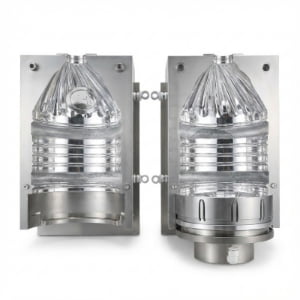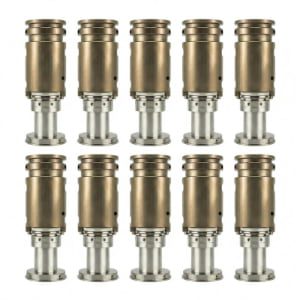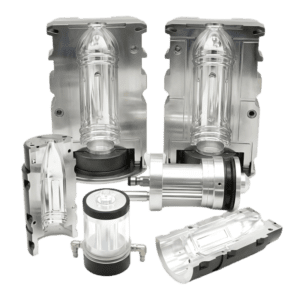
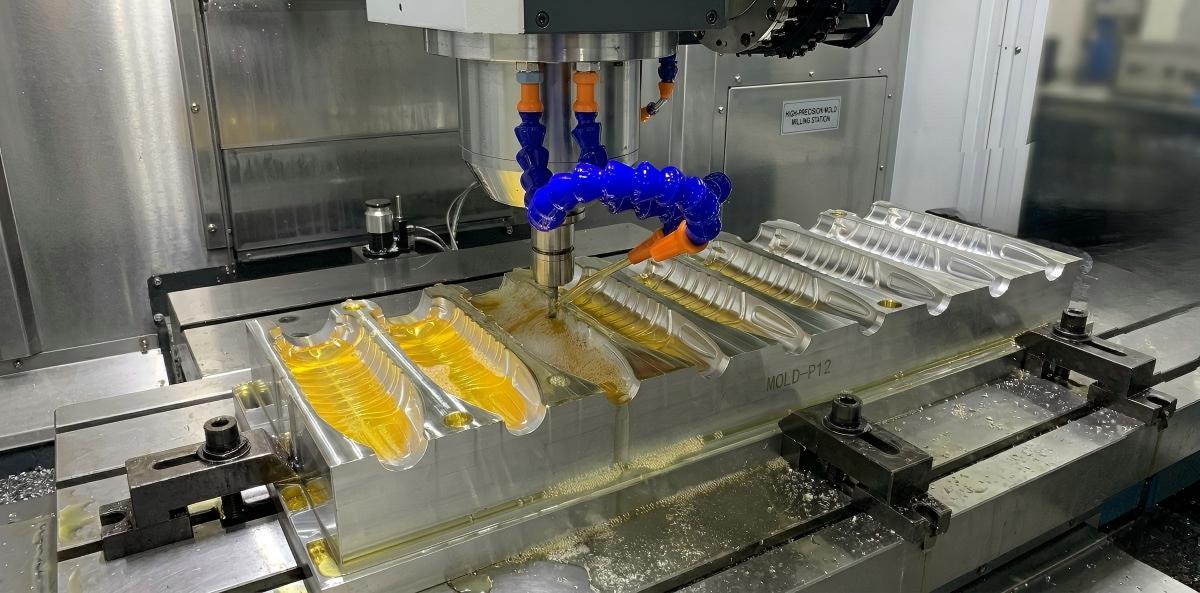
I am Vivian. I have 20 years of experience in mold manufacturing. Yesterday, I heard from my client in Oman. He asked for a 4-cavity PET blow mold. I quoted him aluminum. He wanted iron because iron is cheap. Small factories often sell iron molds to new buyers. I asked him for a photo of his current iron mold. I saw severe rust. The rust destroys the bottle quality. I showed him my client's aluminum mold. My client uses it for 2 years. It has a high surface finish and looks new. New buyers often do not know the material differences. Today, my technical team and I explain why we use aluminum for most blow molds, why we use stainless steel for special molds, and why you must stop buying iron.
Most PET blow molds use aluminum because aluminum is light and cools fast. Aluminum does not rust and has a good surface finish. Light aluminum molds are easy to install. They do not create heavy impact when the machine frame closes. We use S136 stainless steel only for specific high-requirement bottles.
1. The Real Materials: Why Iron is Bad and Aluminum is the Standard
I saw many new buyers buy iron molds or low-quality steel molds. Small mold factories provide iron because the material price is very cheap. New buyers do not know the mold materials. They buy the cheap iron. Do not do this.
Iron is a bad material for blow molds. Iron has poor material properties. Iron requires surface electroplating. After one year of use, the plating falls off and the iron rusts. Iron provides a poor surface finish. You must use 7075 aluminum or high-quality S136 stainless steel.
We must look at the facts about materials. Small factories want to make fast money. They buy cheap iron blocks. They machine the iron. They put electroplating on the iron surface. It looks shiny on the first day. But a blow mold uses cold water for cooling. Water creates condensation. The factory air has moisture.
After one year, the electroplating breaks. The moisture touches the iron. The iron rusts very fast. The rust ruins the mold cavity. The rust transfers to your PET bottles. Your bottles look dirty. You lose your customers. Do not buy iron molds.
We only provide 7075 aluminum and S136 stainless steel. These are professional materials. They do not rust. They have excellent surface finishes.
You must also understand the production process. A preform mold is an injection mold. The injection machine pushes melted plastic with very high friction. It uses extreme clamping force. An injection mold needs hard stainless steel.
But stretch blow molding is different. We do not melt plastic in the blow mold. We use a pre-heated, soft PET preform. High-pressure air (25 to 40 Bar) pushes the soft PET against the mold wall. There is very low physical friction. You do not need the extreme hardness of an injection mold. You need a material that cools fast, stays clean, and does not rust. Aluminum does this perfectly.
| Material Type | Material Cost | Rust Resistance | Surface Finish | Suitability for Blow Molds |
|---|---|---|---|---|
| Cheap Iron | Very Low | Bad (Rusts in 1 year) | Poor | Bad (Do not buy) |
| S136 Stainless Steel | High | Excellent | Perfect | Good (For special bottles) |
| 7075 Aluminum | Medium | Excellent (No rust) | Good | Excellent (Standard choice) |
Do not let small factories trick you with cheap iron. Choose aluminum for standard production. Choose stainless steel for special production. We will explain the exact engineering reasons below.
2. Reason 1: Thermal Conductivity - Faster cooling saves cycle time
In my workshop, I see cooling speed control the factory profit. Slow cooling wastes your daily time. You get fewer bottles per hour. We use aluminum because it transfers heat extremely fast.
The thermal conductivity of aluminum is 130 to 150 W/mK. S136 stainless steel has a thermal conductivity of about 30 to 50 W/mK. Aluminum removes heat from the soft PET much faster. Fast cooling freezes the bottle quickly. This saves 1 to 2 seconds of cycle time.
Cooling is the most important step in the blow molding process. The soft, hot PET touches the mold wall. The mold must freeze the plastic. If the plastic stays hot, the bottle deforms.
We run cold water inside the mold. The metal must move the heat from the plastic to the water. We call this thermal conductivity. We measure it in Watts per meter-Kelvin (W/mK).
Aluminum has a thermal conductivity of 130 to 150 W/mK. It is a very fast heat conductor. S136 stainless steel is an excellent material, but its thermal conductivity is only 30 to 50 W/mK. It is slower than aluminum.
When you blow standard water bottles, you want high speed. You want maximum output. An aluminum mold cools the bottle instantly. The machine opens faster. You save cycle time. Saving 2 seconds per cycle gives you thousands of extra bottles every day.
We do not say stainless steel is bad. Stainless steel is very good. But for standard bottles, aluminum gives you faster daily production.
| Material | Thermal Conductivity (W/mK) | Cooling Speed | Daily Output Impact |
|---|---|---|---|
| S136 Stainless Steel | 30 - 50 | Normal | Good |
| 7075 Aluminum | 130 - 150 | Very Fast | Maximum bottles |
Fast cooling saves money. Aluminum provides the fastest cooling for standard PET bottles.
3. Reason 2: Material Density - Light weight protects the clamping frame
I heard from my client that heavy molds cause loud noises in his machine. The machine frame shakes during closing. We use aluminum because it is light. Light molds protect your machine frame from heavy impact.
Aluminum has a density of 2.7 g/cm3. Stainless steel has a density of 7.8 g/cm3. Aluminum is very light. When the blow molding machine closes the mold frame, a light aluminum mold does not produce a heavy impact. This low mechanical inertia protects the machine tie bars.
We must look at the machine operation. The blow molding machine opens and closes the mold frame very fast. It runs thousands of times every day.
Density is weight per volume. Stainless steel is heavy. Its density is 7.8 g/cm3. Aluminum is light. Its density is 2.7 g/cm3. An aluminum mold is almost three times lighter than a steel mold.
When a heavy steel mold moves fast and stops, it creates high mechanical inertia. The mold frame slams shut. The impact is heavy. This heavy impact hits the machine tie bars and the clamping frame. Over time, heavy impact causes machine wear.
When you use a light aluminum mold, the inertia is low. The machine closes the mold frame smoothly. There is no heavy impact. The machine runs quietly. The tie bars do not bend. You protect your expensive machine hardware.
Another big benefit is installation. Factory workers must install the mold into the machine. A heavy steel mold is very hard to move. You need heavy lifting tools. A light aluminum mold is easy to install. Workers can move it easily. It saves setup time.
| Material | Density | Weight | Clamping Impact | Installation |
|---|---|---|---|---|
| Stainless Steel | ~7.8 g/cm3 | Heavy | High impact | Hard to install |
| Aluminum | ~2.7 g/cm3 | Light | Low impact (Safe) | Easy to install |
Use light aluminum to protect your machine. Do not subject your clamping frame to unnecessary heavy impact.
4. Reason 3: Faster Machining and Good Surface Finish
I saw mold makers spend weeks cutting hard steel molds. Long manufacturing times delay your project. Aluminum is easy to cut and provides a very good, rust-free surface finish.
CNC machines cut aluminum very fast. The cutting tools do not wear out quickly. This saves manufacturing time. You get your mold faster. Aluminum also polishes well. It naturally resists rust. It gives the PET bottle a clean, bright surface finish.
When you order a mold, you want it fast. We use CNC milling machines to cut the bottle design into the metal.
Stainless steel is very hard. The CNC machine must cut slowly. The tools get dull fast. It takes a long time to finish the mold cavity.
Aluminum has excellent machinability. The CNC machine cuts aluminum at high speeds. We finish the mold much faster. We deliver the mold to your factory faster.
Aluminum also has a great natural surface. Remember the cheap iron? Iron has a poor surface and it rusts. Aluminum never rusts. Aluminum does not contain iron. We polish the aluminum cavity. The surface finish is very smooth and bright. Your bottles come out looking clean and professional.
5. Reason 4: Yield Strength - 7075-T6 handles the pressure
I heard from my client that aluminum might be too soft for high pressure. This is true for cheap aluminum. But we do not use cheap aluminum. We use 7075-T6 aircraft-grade aluminum.
We use 7075-T6 aluminum. It is not soft. The yield strength of 7075-T6 aluminum is about 500 MPa. The blowing pressure inside the mold is only 25 to 40 Bar. The 500 MPa strength easily withstands this pressure. The mold cavity will not deform.
Do not think all aluminum is the same. Cheap aluminum is soft. It bends easily. Do not buy cheap aluminum molds.
We use 7075-T6 aluminum. This is the material they use for airplanes. It is incredibly strong. Yield strength is the point where a metal bends permanently. The yield strength of 7075-T6 is about 500 MPa.
During blow molding, the air pressure is 25 to 40 Bar. This pressure pushes against the mold wall. The 500 MPa strength of 7075 aluminum easily stops the 40 Bar pressure. The mold size stays perfect. You get accurate bottle volumes for millions of cycles.
| Material | Yield Strength (MPa) | Performance under 40 Bar Air Pressure |
|---|---|---|
| Cheap Pure Aluminum | < 100 | Bad (Will deform) |
| 7075-T6 Aluminum | ~500 | Excellent (Very stable) |
6. The Hybrid Design: Adding S136 Stainless Steel Inserts
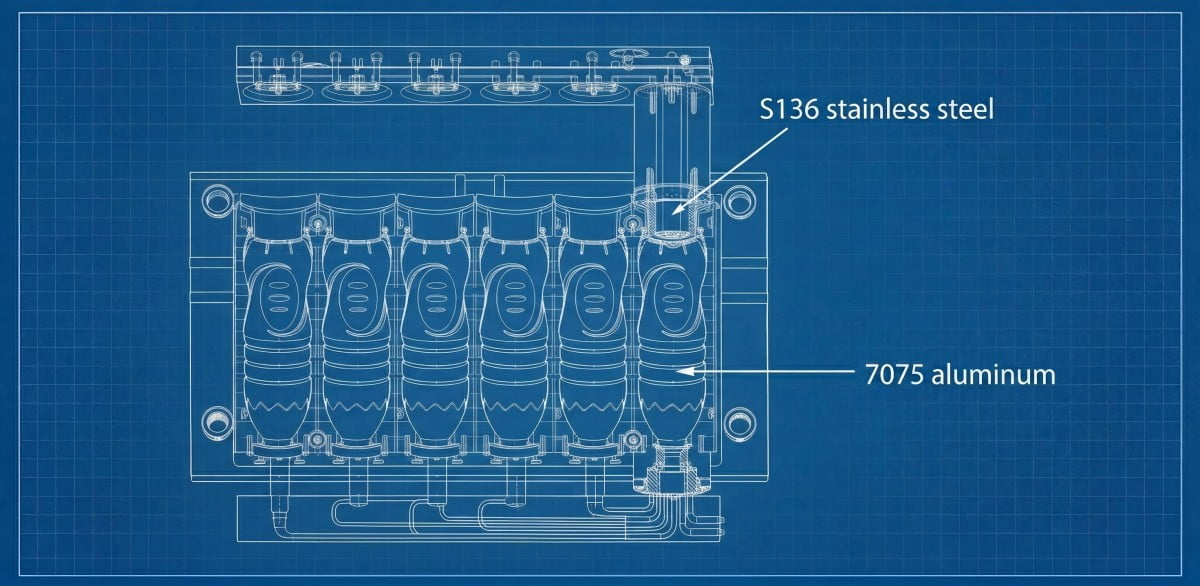
In my workshop, I see where the most friction happens. The mold base and the neck area take mechanical rubbing. Pure aluminum can wear down here. We add S136 stainless steel to fix this.
The mold base and the neck inserts experience mechanical friction during closing. We machine the main mold body from 7075 aluminum for fast cooling. We machine the base and neck inserts from S136 stainless steel for maximum hardness. This hybrid design is the best standard.
We know aluminum cools fast and is light. We know S136 stainless steel is extremely hard and resists mechanical wear. We use both.
When the mold closes, the bottom base pushes up. It rubs against the mold frame. The neck area clamps the hard preform thread. If we use aluminum here, it will wear out over time.
So, we make the large body from 7075 aluminum. Then, we insert S136 stainless steel blocks into the base and the neck. You get the fast cooling of aluminum. You get the hard wear resistance of S136 steel. This is how a professional mold is built.
7. When S136 Stainless Steel is the Only Choice
I saw a factory try to use an aluminum mold for a hot-fill juice bottle. The continuous heat warped the aluminum mold. For some specific bottles, S136 stainless steel is the mandatory choice.
Aluminum is great for standard water bottles. But for hot fill PET molds and cosmetic bottle molds, we only use S136 stainless steel. Hot fill requires continuous high heat, and steel remains dimensionally stable. Cosmetic bottles need a mirror polish, and dense S136 steel provides the perfect mirror finish.
We do not say stainless steel is a bad choice. S136 stainless steel is a premium material. But you must match the material to the bottle type.
Exception 1: Hot Fill Bottles. If you produce hot tea or hot juice, the liquid is very hot. A normal bottle will shrink. We must blow the bottle in a hot mold. We pump hot oil or hot water into the mold. The mold stays at a very high temperature constantly. Aluminum loses its stability under continuous high heat. It can warp. S136 stainless steel has perfect high-temperature stability. We use S136 for all hot fill molds.
Exception 2: Premium Cosmetic Bottles. If you produce high-end lotion or shampoo bottles, the brand wants the bottle to shine like a mirror. Aluminum has microscopic pores. It cannot hold a 100% perfect mirror polish. S136 stainless steel has a very dense molecular structure. We polish S136 until it is a flawless mirror. The cosmetic bottles look perfect.
| Bottle Type | Best Mold Material | Reason |
|---|---|---|
| Standard Water / Soda | 7075 Aluminum (with S136 inserts) | Fast cooling, light weight, low impact |
| Hot Fill Juice / Tea | S136 Stainless Steel | High temperature dimensional stability |
| Cosmetic / Daily Chemical | S136 Stainless Steel | Perfect mirror polish surface |
5 Core FAQs About PET Blow Mold Materials
1. Why do small factories quote iron molds?
They quote iron because raw iron is extremely cheap. However, iron requires electroplating. After one year, the plating cracks, the iron rusts, and your mold is ruined. Do not buy iron molds.
2. Will an aluminum mold rust?
No. Aluminum does not contain iron. It physically cannot rust. It maintains a clean, bright surface for its entire lifespan.
3. Is an aluminum mold easy to install?
Yes. Because aluminum is three times lighter than stainless steel, factory workers can easily lift and install the mold. It saves a lot of setup time.
4. Does an aluminum mold damage the blow molding machine?
No, it protects the machine. The light weight means there is low mechanical inertia. When the machine frame closes, there is no heavy impact on the tie bars.
5. When should I choose an S136 stainless steel mold?
You must choose an S136 stainless steel mold if you are producing hot-fill bottles (like hot tea) or high-end cosmetic bottles that require a perfect mirror polish on the surface.
Final Summary Table
| Feature | Cheap Iron | 7075 Aluminum | S136 Stainless Steel |
|---|---|---|---|
| Material Cost | Very Cheap | Medium | High |
| Rust Resistance | Bad (Rusts easily) | Excellent (No rust) | Excellent (No rust) |
| Weight / Installation | Heavy / Hard | Light / Easy | Heavy / Hard |
| Clamping Impact | High impact | Low impact (Safe) | High impact |
| Cooling Speed | Slow | Very Fast | Slow |
| Surface Finish | Poor | Good and Bright | Perfect Mirror |
| Best Application | None (Do not buy) | Standard Water / Soda | Hot Fill / Cosmetics |
Do not buy cheap iron molds. Understand your production process. Use light, fast-cooling aluminum for your standard daily production. Use S136 stainless steel for your specialty bottles. Contact us to get the right mold for your factory.