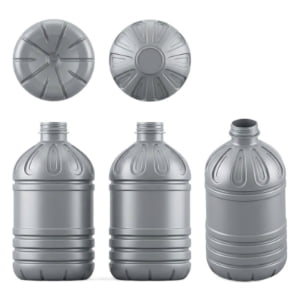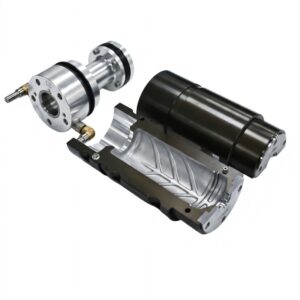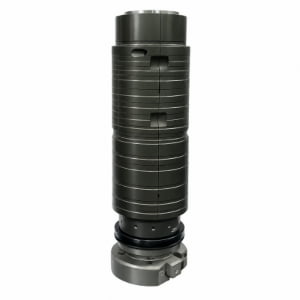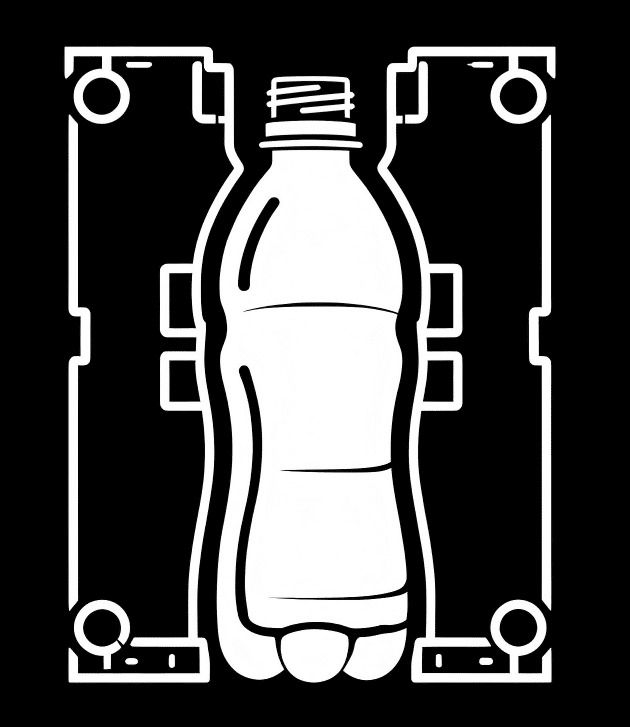
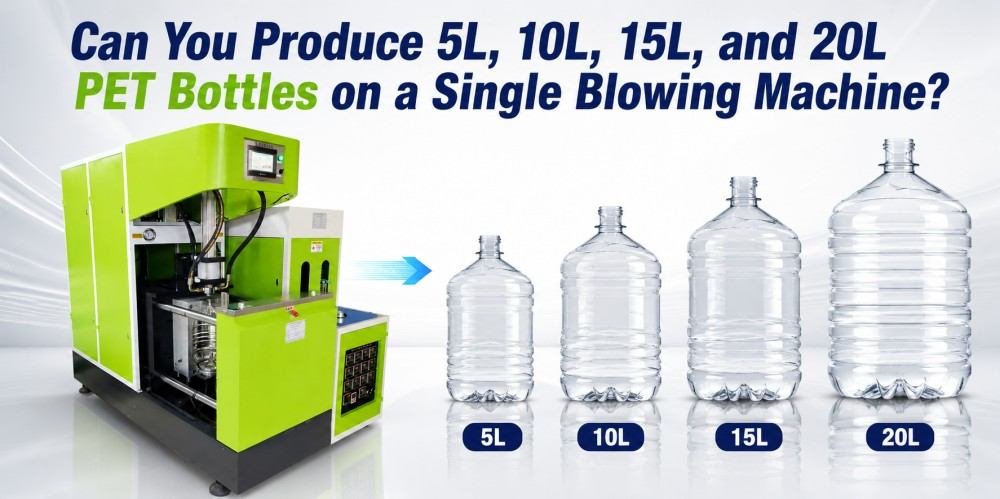
Yes, you can produce 5L to 20L PET bottles on a single machine by utilizing a 20L semi-automatic blowing machine. This highly flexible platform easily accommodates varying mold sizes and preform neck finishes. While it operates at a slower hourly output for smaller 5L bottles compared to dedicated high-speed equipment, it provides exceptional mold clamping force, resulting in zero-flash quality and the highest return on investment for diverse large-capacity production.
Last week, I received multiple inquiries from factory owners in South Africa, Chile, and the Middle East, all asking the exact same mechanical question: "Can I use one blow molding machine to produce my entire large-capacity range, from 5L to 20L?" The definitive answer is yes. In international tooling procurement, many buyers assume they must purchase a dedicated automatic machine for each bottle size. This is an incorrect and capital-intensive assumption.
While fully automatic machines struggle with this extreme size variation due to rigid preform loading rails and fixed pitch limits, a properly engineered semi-automatic platform thrives on flexibility. By understanding the physics of clamping force, stretch rod calibration, and modular oven configuration, factory owners can utilize a single 20L machine as a universal production cell. Today, my engineering team and I will dissect the mechanics of producing 5L, 10L, 15L, and 20L bottles on a single semi-automatic blowing machine.
1. Understanding Clamping Force: The Pros and Cons of "Sizing Down"
Producing a 5L bottle on a 20L machine utilizes overwhelming clamping force, guaranteeing a flawless, flash-free parting line. However, the mechanical stroke is designed for massive 20L molds, meaning the machine's opening and closing cycle is longer, which limits the total hourly output when running smaller 5L containers.
To evaluate the feasibility of producing multiple bottle sizes on one machine, we must first analyze the mechanics of clamping force. A blow molding machine designed for 20L (5-gallon) bottles is built to withstand immense internal pneumatic pressure. When 35 bar of high-pressure air inflates a 750g preform into a 20L cavity, the resulting outward force attempting to push the mold halves apart is massive. Consequently, the machine features heavy-duty toggle linkages or direct hydraulic cylinders capable of delivering extreme locking tonnage.
When you install a much smaller 5L mold into this heavy-duty machine, you are executing an engineering strategy I refer to as a "downward strike." The outward pneumatic force generated by blowing a 5L bottle is a fraction of the 20L force. The machine's clamping mechanism easily overpowers this outward pressure, ensuring the mold halves remain perfectly locked. The physical result is a 5L bottle with a flawless, zero-flash parting line.
However, you must objectively acknowledge the operational compromise: cycle time. The machine's physical framework is built to accommodate a mold large enough for a 275mm diameter 20L bottle. Therefore, the mold carriage opening and closing stroke (the distance the platens travel) is very long. Even when a smaller 5L mold is installed, the machine still completes this long mechanical stroke. This extends the dry cycle time. While the bottle quality is pristine, the hourly output for 5L bottles will be noticeably slower than if you were running them on a dedicated, short-stroke 5L automatic machine.
2. The Neck Finish Dilemma: Managing Different Preform Sizes
Different bottle volumes utilize distinct neck finishes, such as 45mm for 5L and 55mm for 20L. To manage this on a single machine, operators must physically swap the heating mandrels in the infrared oven and replace the neck locating plates on the blowing station to secure the specific preform geometry.
The primary mechanical obstacle in cross-volume production is the preform neck finish. A 5L bottle typically utilizes a smaller preform with a 45mm or 48mm neck diameter. A 20L water jug requires a massive preform, often exceeding 680g, with a 55mm smart-cap neck finish. A blow molding machine cannot automatically adapt to these varying diameters; it requires targeted manual changeovers.
The semi-automatic machine architecture excels here due to its modular design. In the preform heating oven, the preforms are mounted onto heating mandrels (bases) that rotate as they pass the infrared lamps. When switching from 20L to 5L production, the operator must unbolt the 55mm mandrels and install the 45mm mandrels.
Similarly, inside the blowing station, the preform is clamped securely by the neck locating plates (neck inserts) before high-pressure air is introduced. These plates must exactly match the neck profile to seal the blowing nozzle. Changing the bottle volume mandates swapping these plates. Furthermore, it is a strict mechanical rule that every bottle size and unique shape requires its own dedicated blow mold. You cannot use a 20L mold to produce a 10L bottle. You must purchase four distinct molds for the four distinct capacities. To understand closure compatibility across these variations, refer to the ultimate guide to preform neck finishes.
Large Capacity PET Bottles: Typical Preform Specs
| Bottle Volume | Typical Neck Finish Standard | Preform Weight Range | Max Final Bottle Diameter |
|---|---|---|---|
| 5L - 8L | 45mm / 48mm | 80g - 130g | ~ 160mm |
| 10L - 15L | 48mm / 55mm | 250g - 350g | ~ 240mm |
| 20L (5 Gallon) | 55mm (Smart Cap / Press-on) | 680g - 750g | ~ 275mm |
3. Oven Adjustability: Heating 80g vs. 750g Preforms
Heating profiles differ drastically between an 80g 5L preform and a 750g 20L preform. A 20L semi-automatic oven features multi-zone, independent temperature controls, allowing technicians to precisely penetrate thick-walled preforms without crystallizing or melting thin-walled variants.
The thermal dynamics of stretching PET vary exponentially with preform mass. A 750g 20L preform has an exceptionally thick wall (often exceeding 8mm). Heat from the infrared lamps must penetrate deep into the polymer core without scorching the outer surface. This requires prolonged exposure and highly segmented temperature zoning across the vertical axis of the preform.
Conversely, an 80g 5L preform has a much thinner wall. If exposed to the heating profile required for a 20L preform, the 5L preform will melt, crystallize (turn white), or deform completely before reaching the mold.
A well-engineered 20L semi-automatic blow molding machine is equipped with a highly versatile infrared oven. The voltage to each individual horizontal lamp layer can be adjusted independently via the PLC interface. When switching production, the technician loads the specific heating recipe for the target volume. They can activate more lamps and higher voltages for the 20L preform, and reduce the power output and deactivate unnecessary lower lamps for the shorter, thinner 5L preform. If you observe cloudy or white patches on your bottles during changeovers, review our 6-step troubleshooting guide for PET bottle pearlescence and white haze.
4. Stretch Rod Stroke and Mechanical Calibration
When swapping from a tall 20L mold to a shorter 5L mold, the stretch rod stroke must be mechanically recalibrated. The technician must shorten the downward travel distance to ensure the rod precisely anchors the preform base without violently impacting the bottom mold insert.
The blow molding process relies on bi-axial orientation. While high-pressure air expands the preform radially, a mechanical stretch rod pushes the preform axially toward the bottom of the mold. The physical height difference between a 20L water jug (approx. 490mm) and a 5L bottle (approx. 320mm) requires critical adjustments to this mechanism.
If an operator changes the mold from 20L to 5L but forgets to recalibrate the stretch rod, the machine will attempt to push the rod down to the 20L depth. The rod will smash violently into the bottom of the 5L mold, severely damaging the S136 stainless steel base insert and bending the pneumatic cylinder.
Every time a different mold is installed, the technician must execute a manual, low-speed dry cycle. They adjust the magnetic sensors on the stretch rod cylinder or modify the mechanical stop blocks to ensure the rod stops exactly 1mm to 2mm above the bottom mold surface. This precise calibration anchors the center gate of the preform, preventing base eccentricity (off-center gates). For an in-depth analysis on maintaining base centering, see our protocol on fixing center gate bulging and rocker bottoms.
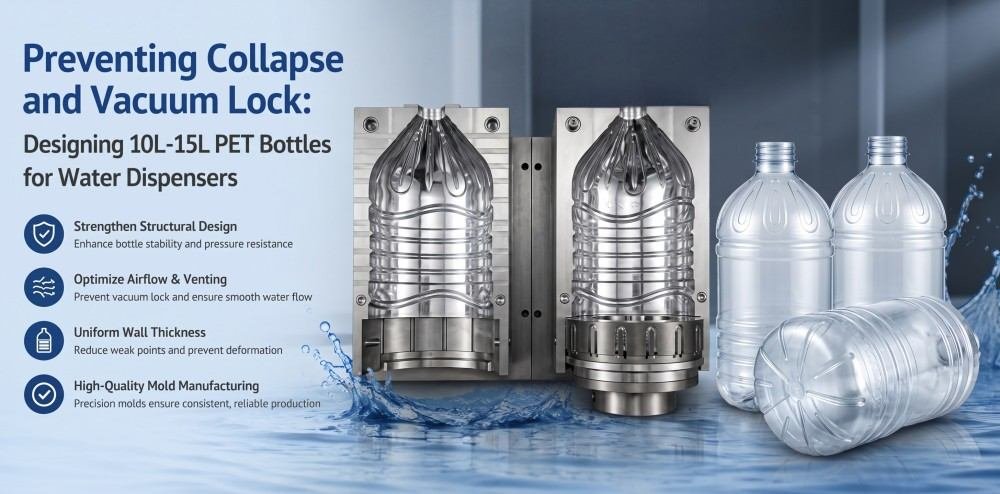
Failing to recalibrate the stretch rod stroke when switching from a 20L to a 5L mold will result in severe base eccentricity or catastrophic mold damage.
5. Mold Changeover Efficiency: Why Single-Cavity Design Wins
Because a 20L machine is built for maximum physical expansion, it utilizes a single-cavity mold structure. This simple, single-block configuration significantly accelerates mold changeovers compared to multi-cavity automatic systems, allowing factories to efficiently process fragmented orders across multiple bottle sizes.
In the context of multi-volume production, the single-cavity design of the 20L semi-automatic machine is a massive logistical advantage. Producing a 20L bottle requires an immense physical footprint for the mold block to accommodate the expanded polymer. Therefore, these machines are almost exclusively engineered as single-cavity (1-cavity) platforms.
If you attempt to run multiple capacities on a fully automatic 4-cavity or 6-cavity machine, a mold changeover can take a skilled engineering team an entire day. They must align multiple water lines, calibrate synchronized stretch rods, and adjust complex preform loading rails.
On a single-cavity semi-automatic machine, changing from a 20L mold to a 5L mold is straightforward. The operator removes one front mold block and one rear mold block, disconnects a few cooling water lines, swaps the bottom mold insert, and bolts the new set in place. A proficient technician can complete this entire mechanical changeover in under an hour. This rapid flexibility allows a factory to run 500 units of 20L bottles in the morning and seamlessly switch to 2,000 units of 5L bottles in the afternoon, perfectly accommodating fragmented market demands.
Production & Changeover Matrix on a 20L Semi-Auto Machine
| Target Bottle Size | Mold Configuration | Estimated Output (BPH) | Estimated Mold Change Time |
|---|---|---|---|
| 20L (5 Gallon) | 1 Cavity | 100 - 150 BPH | Baseline (Initial setup) |
| 10L - 15L | 1 Cavity | 150 - 200 BPH | Fast (Straightforward block swap) |
| 5L | 1 Cavity | 200 - 250 BPH | Fast (Output limited by the long mechanical clamping stroke) |
6. Air Compressor Sizing for Multi-Volume Production
To ensure continuous quality across all bottle sizes, the high-pressure air compressor system must be sized based on the maximum consumption of the 20L bottle. Sizing for the highest demand guarantees an abundant air supply when blowing smaller 5L and 10L containers, resulting in exceptional structural definition.
The pneumatic infrastructure supporting the blow molding machine is just as critical as the machine itself. Blow molding requires high-pressure air (typically 30 to 40 bar) to force the heated PET into the intricate details of the mold cavity.
The air volume required to inflate a 20L bottle is exponentially larger than the volume required for a 5L bottle. A common engineering error occurs when a factory purchases an air compressor sized for their average production run (e.g., 10L) to save on initial capital expenditure. When they switch to producing 20L bottles, the compressor cannot replenish the air tanks fast enough. The blowing pressure drops, resulting in under-blown bottles with poorly defined base structures and collapsed corners.
The strict engineering protocol is to configure the entire high-pressure system (compressor, filters, and air tanks) based entirely on the maximum flow rate demanded by the 20L production cycle. When the system is robust enough for 20L, downward compatibility is guaranteed. Blowing 5L or 10L bottles on a system sized for 20L ensures instantaneous pressure delivery, forcing the PET to capture every CNC-machined detail of the mold cavity with zero pressure drop.
7. ROI Analysis: The Ultimate Setup for Diverse Water Plants
Investing in a single 20L semi-automatic machine alongside dedicated molds for 5L, 10L, 15L, and 20L sizes drastically minimizes Capital Expenditure (CAPEX) and factory floor space. This universal configuration provides unparalleled production flexibility, making it the highest ROI strategy for diverse water plants.
For start-up water plants or expanding facilities in emerging markets, managing Capital Expenditure (CAPEX) is the primary driver of profitability. The market often demands a diverse portfolio of bottle sizes, but investing in dedicated machinery for every SKU is financially paralyzing.
If a factory purchases four separate machines—one dedicated 5L automatic, one 10L, one 15L, and one 20L—they face massive upfront equipment costs. Furthermore, they must allocate massive factory floor space, install four separate electrical drops, and route four distinct cooling water circuits. If the market demand for 10L bottles suddenly drops, that specific machine sits idle, generating zero return.
Deploying a single 20L semi-automatic machine eliminates this risk. The initial machine investment is low. The only additional capital required is purchasing the specific blow molds for the 5L, 10L, and 15L sizes, along with their corresponding neck mandrels. This creates a highly agile production cell. The machine is never idle; it simply pivots to the bottle size the market demands that week. For a deeper breakdown of tooling investments, review our comprehensive analysis on PET blow mold costs.
Cost-Benefit Analysis: Universal Semi-Auto vs. Multiple Machines
| Investment Factor | Option A: One Universal 20L Semi-Auto | Option B: Four Dedicated Machines (5L to 20L) |
|---|---|---|
| Machine CAPEX | Low (Single base machine investment) | Extremely High (4x independent machine costs) |
| Floor Space Required | Minimal (One compact production cell) | Massive (Requires extensive factory layout) |
| Production Flexibility | Maximum (Produce any size on demand) | Rigid (Machines sit idle if that specific size lacks orders) |
| Mold Configuration | One dedicated mold per volume size | Requires separate molds for each distinct machine |
Conclusion: Flexibility over Absolute Speed
In the specialized field of large-capacity PET manufacturing, prioritizing absolute speed often leads to rigid, capital-intensive operations. While a dedicated high-speed automatic machine will always outpace a semi-automatic platform on a single bottle size, it cannot match the versatility required by diverse, modern water plants. The ability to produce 5L, 10L, 15L, and 20L bottles on a single 20L semi-automatic blowing machine provides factory owners with a definitive competitive advantage. By understanding the required adjustments to the preform oven, neck plates, and stretch rod stroke, you can leverage overwhelming clamping force to produce flawless containers across all capacities.
Frequently Asked Questions (FAQs)
Q1: What is the main disadvantage of using a 20L blowing machine to produce 5L bottles?
The primary disadvantage is production speed. A 20L machine is built with a very long mechanical stroke to accommodate massive 20L molds. When you put a 5L mold into this machine, the mold opens and closes using that same long stroke, which makes the mechanical cycle slower and limits your hourly output compared to a dedicated 5L machine.
Q2: How do I handle different neck finishes like 45mm for 5L and 55mm for 20L?
The semi-automatic blowing machine is designed for easy modular changes. You simply swap out the heating mandrels (bases) in the preform oven to match the specific neck diameter of your preform. Additionally, you will change the neck locating plates on the blowing station to ensure a secure grip during the blow process.
Q3: Can I use the same blow mold for 15L and 20L bottles?
No. Every specific bottle volume and unique design shape requires its own dedicated blow mold. If you want to produce 5L, 10L, 15L, and 20L bottles, you must purchase four separate, dedicated blow molds to be used interchangeably on the same machine.
Q4: Why are most 20L semi-automatic machines single-cavity?
Because blowing a 20L bottle requires immense clamping force and a very large physical space for mold expansion, a single-cavity structure is the most stable and reliable engineering choice. This simple single-cavity design also makes the machine much easier to operate and significantly speeds up the mold changeover process.
Q5: Will blowing a small 5L bottle on a large 20L machine cause defects like parting line flash?
No, the quality is actually exceptional. Producing a 5L bottle on a 20L machine means the machine applies a clamping force far exceeding what the small mold requires. This ensures the mold halves stay perfectly sealed under high blowing pressure, resulting in zero flash and an incredibly smooth parting line.
Related Technical Guides:
- Custom Blow Molds: 4 Reasons Your New Mold Won't Fit Your Blowing Machine
- PET Bottle Base Rollout Analysis: A 6-Step Guide to Fixing Center Gate Bulging
- PET Bottle Pearlescence (White Haze): A 6-Step Troubleshooting Guide
- The Ultimate Guide to Preform Neck Finishes: How to Choose the Right Standard for Your Bottle
- Comprehensive Analysis: How Much Does a PET Blow Mold Cost?