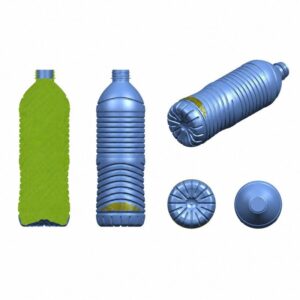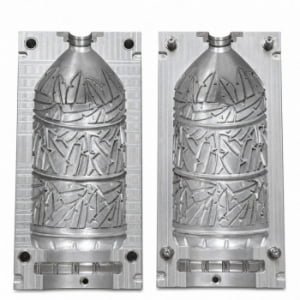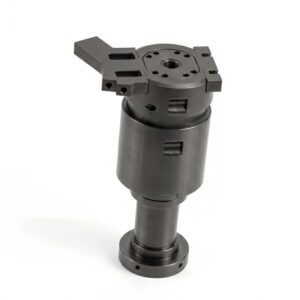
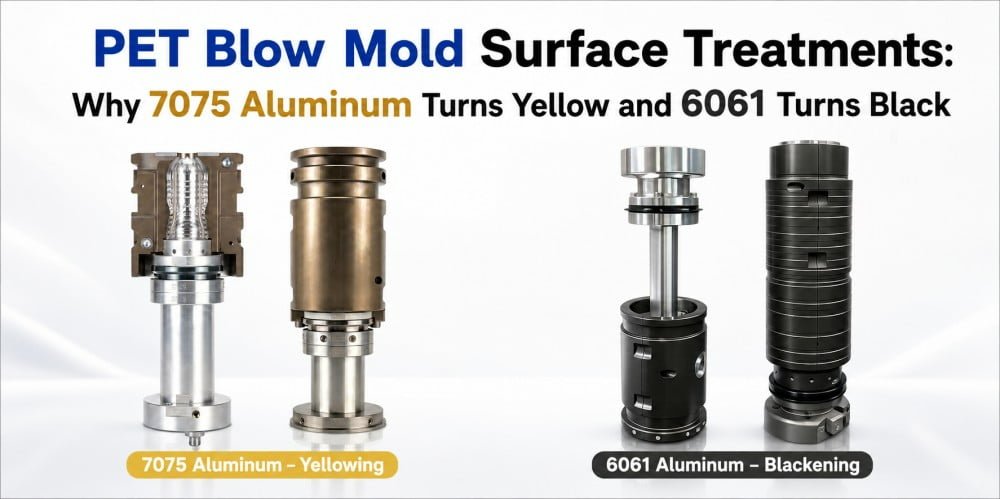
The color difference in PET blow molds after surface treatment originates from the specific alloying elements within the aluminum. 6061 aluminum contains magnesium and silicon, resulting in a dark grey or black finish after Type III Hard Anodizing. In contrast, 7075 aviation-grade aluminum contains high levels of zinc and copper, which chemically react during the anodizing process to produce a distinct yellow or dark golden oxide layer. Understanding these metallurgical reactions allows engineers to match mold material strength with the specific mechanical demands of linear or rotary blowing machines.
Yesterday, I received an inquiry from a Moroccan client requesting a custom 20-cavity blow mold for a Krones rotary system. During our technical review, the client raised questions regarding the material selection and expressed confusion over why our proposed molds featured a yellow surface rather than the standard silver or black they had previously sourced. I explained that in high-speed rotary blow molding, material science dictates production stability. The yellow hue is not a cosmetic choice; it is the electrochemical signature of 7075 aviation aluminum undergoing hard anodizing—a mandatory requirement to withstand the extreme clamping forces of continuous rotary production. Today, I am sharing this engineering breakdown with overseas buyers to clarify the structural mechanics behind blow mold surface treatments.
1. What is PET Blow Mold Surface Treatment: The Invisible Shield
Type III Hard Anodizing is an electrochemical surface treatment that generates a dense, wear-resistant aluminum oxide film on the blow mold cavity. This process significantly increases surface hardness and establishes a protective barrier against cooling channel corrosion, ensuring long-term dimensional stability during continuous high-pressure operations.
In my workshop, I frequently emphasize to our engineering team that blow mold surface treatment is strictly an electrochemical necessity, not a cosmetic painting process. When we apply Type III Hard Anodizing to a PET blow mold, the aluminum component is submerged in an electrolytic bath—typically sulfuric acid—and subjected to a high-voltage direct current at tightly controlled, near-freezing temperatures. This process forces oxygen ions to combine with the aluminum substrate, cultivating an $Al_2O_3$ (aluminum oxide) crystalline structure directly out of the base metal.
Do not categorize this as a surface coating. A coating sits on top of the metal and is susceptible to peeling under mechanical stress. Hard anodizing penetrates the aluminum matrix while simultaneously building outward, creating a surface layer that integrates completely with the mold's core geometry. The resulting surface hardness typically ranges from 40 to 60 HRC, depending on the specific alloy composition.
Beyond cavity wear resistance, the anodizing process provides critical protection for the internal cooling channels. PET blow molding requires continuous circulation of chilled water to extract heat from the expanded polymer. If the aluminum channels remain untreated, the constant flow of water induces galvanic corrosion and oxidation, eventually restricting fluid dynamics and degrading the mold's thermal transfer efficiency. By anodizing the entire mold block, we establish an inert barrier that preserves turbulent flow rates and stabilizes the thermodynamic cooling cycle. For a deeper understanding of thermal extraction dynamics, refer to our analysis on why are most PET blow molds made of aluminum.
2. How to Utilize Raw Aluminum: The Baseline for Standard Linear Molds
Raw aluminum surfaces represent the standard baseline for linear blow molding equipment. By utilizing untreated aluminum, manufacturers achieve high thermal dissipation rates and reduced production lead times. This configuration provides a highly cost-effective engineering solution for applications involving moderate clamping forces and standard production speeds.
When evaluating tooling for standard linear machines, you will frequently observe molds with a natural silver-white finish. This is raw, uncoated aluminum. Many overseas buyers question whether omitting the anodizing process compromises the structural integrity of the mold. The engineering reality is that for standard linear blow molding machines operating at moderate speeds, untreated aluminum provides an optimal balance of thermal efficiency and manufacturing economy.
Linear blowing machines typically utilize pneumatic or toggle-based clamping mechanisms. The kinetic energy and impact forces transferred to the mold parting line during the closing phase are significantly lower than those generated by continuous rotary systems. Therefore, the inherent yield strength of premium raw aluminum is sufficient to withstand the operational load without experiencing rapid edge degradation.
By bypassing the hard anodizing phase, the manufacturing cycle is shortened. More importantly, leaving the aluminum untreated maximizes its natural thermal conductivity. Untreated aluminum alloys transfer heat at a rate of approximately 130 to 160 W/m·K, allowing the expanded PET to cool and lock its molecular orientation rapidly. This rapid thermal extraction is critical for preventing post-ejection shrinkage, a phenomenon we detail in our guide on PET bottle volume shrinkage analysis.
| Parameter | Untreated Raw Aluminum | Hard Anodized Aluminum | Engineering Implication |
|---|---|---|---|
| Thermal Conductivity | Maximum (Base material limit) | Slightly reduced by oxide layer | Raw aluminum extracts heat marginally faster. |
| Surface Hardness | Base alloy hardness (e.g., ~150 HB) | 40-60 HRC | Anodized surfaces resist mechanical abrasion. |
| Corrosion Resistance | Moderate (Susceptible to pH shifts) | Extremely High | Anodizing protects internal cooling channels. |
| Manufacturing Lead Time | Standard | Extended by 3-5 days | Raw molds support accelerated delivery schedules. |
3. Cost of Surface Treatments: 6061 Aluminum Black Finish vs. Uncoated
Applying a black hard anodizing finish to 6061 aluminum increases the initial tooling cost but significantly extends the operational lifespan. The magnesium and silicon alloys in 6061 react to form a dark, anti-corrosive layer that resists daily handling abrasion and stabilizes continuous production outputs.
When factory owners seek an upgrade from raw aluminum without moving to aerospace-grade materials, 6061 aluminum with a black hard anodized finish is the standard engineering choice. 6061 is an Al-Mg-Si (Aluminum-Magnesium-Silicon) alloy. During the electrochemical anodizing process, these specific alloying elements react to form a dense oxide layer that naturally appears dark grey or deep black.
The cost engineering of this treatment requires careful calculation. Adding Type III Hard Anodizing increases the base cost of the blow mold due to the electrical energy consumed, the chemical processing time, and the rigorous dimensional masking required to protect high-tolerance mounting points. However, this initial expenditure is quickly recovered through extended tooling longevity.
Do not underestimate the physical wear experienced by blow molds outside of the machine. Molds are frequently uninstalled, transported to storage racks, and manually cleaned. Untreated 6061 aluminum is susceptible to surface scratches from operator handling, which can transfer to the final PET bottle as visual defects. The black anodized layer acts as a mechanical shield against incidental abrasion. Furthermore, the dark surface improves radiant heat absorption, which can assist in stabilizing the thermodynamic profile of the cavity during specific hot-fill blowing applications. To understand how mold investments translate to long-term profitability, review our comprehensive analysis on PET blow mold costs.
4. 7075 Aviation Aluminum (Yellow) vs. 6061 Aluminum (Black)
The yellow finish of anodized 7075 aluminum indicates the presence of zinc and copper, providing superior tensile strength for high-load applications. In contrast, the black finish of 6061 aluminum offers moderate structural rigidity. Selecting between them depends entirely on the clamping force of the specific blowing equipment.
The visual distinction between a yellow mold and a black mold serves as a direct indicator of the base metal's metallurgical composition. 7075 aluminum is classified as an aerospace-grade alloy, primarily alloyed with zinc (5.1–6.1%) and copper (1.2–2.0%). When 7075 undergoes the Type III Hard Anodizing process, the high zinc and copper content undergoes a chemical reaction that inherently produces a yellowish, dark gold, or sometimes greenish-brown oxide layer.
We utilize 7075 aluminum exclusively when the physical demands of the blow molding process exceed the mechanical limits of standard 6061 alloys. 7075 aluminum possesses a tensile strength of approximately 572 MPa, nearly double that of 6061 aluminum (approx. 310 MPa). This exceptional rigidity is mandatory for resisting the continuous impact forces generated by the mold carrier's locking mechanisms on high-speed equipment.
Avoid specifying 6061 aluminum for multi-cavity rotary molds. The constant dynamic loading will cause the parting lines of a 6061 mold to yield and flatten over time. When the parting line degrades, high-pressure blowing air (up to 40 bar) escapes, leading to pneumatic leakage and incomplete bottle formation. The yellow 7075 aluminum mold, backed by its superior yield strength, maintains strict parting line tolerances across millions of cycles, ensuring a seamless visual appearance on the final container.
| Material Property | 6061 Aluminum (Black Anodized) | 7075 Aluminum (Yellow Anodized) | Mechanical Advantage |
|---|---|---|---|
| Primary Alloying Elements | Magnesium & Silicon | Zinc & Copper | Determines structural density and anodizing color. |
| Tensile Strength | ~ 310 MPa | ~ 572 MPa | 7075 resists mechanical deformation under extreme tonnage. |
| Yield Strength | ~ 276 MPa | ~ 503 MPa | 7075 prevents parting line degradation during closing impact. |
| Fatigue Resistance | Moderate | Exceptional | 7075 withstands the high-frequency vibrations of rotary machines. |
5. Common Problems of Rotary vs. Linear Molds: How Machine Speed Dictates Treatment
Rotary blowing machines generate extreme centrifugal forces and rely on mechanical cam-driven clamping, necessitating the extreme durability of anodized 7075 aluminum. Standard linear machines utilize pneumatic or servo-driven toggles with lower impact velocities, allowing for the use of raw or standard anodized 6061 aluminum.
The mechanical architecture of the blow molding machine dictates the required metallurgical properties of the mold. In international tooling procurement, a common deviation occurs when buyers attempt to use linear mold design standards for high-speed rotary equipment, leading to rapid catastrophic tooling failure.
Rotary machines, such as those manufactured by Sidel or Krones, operate continuously. The mold carriers rotate on a massive carousel, utilizing stationary mechanical cams to forcefully snap the molds shut at extremely high velocities. The kinetic energy transferred to the mold faces during this cam-actuated closing is immense. If an untreated aluminum mold or a standard 6061 mold is installed in a rotary machine, the continuous high-impact collisions will rapidly peen the parting line edges. As the edges flatten, the mold loses its ability to seal the 40-bar blowing pressure, resulting in severe material extrusion at the seam and structural failure of the bottle.
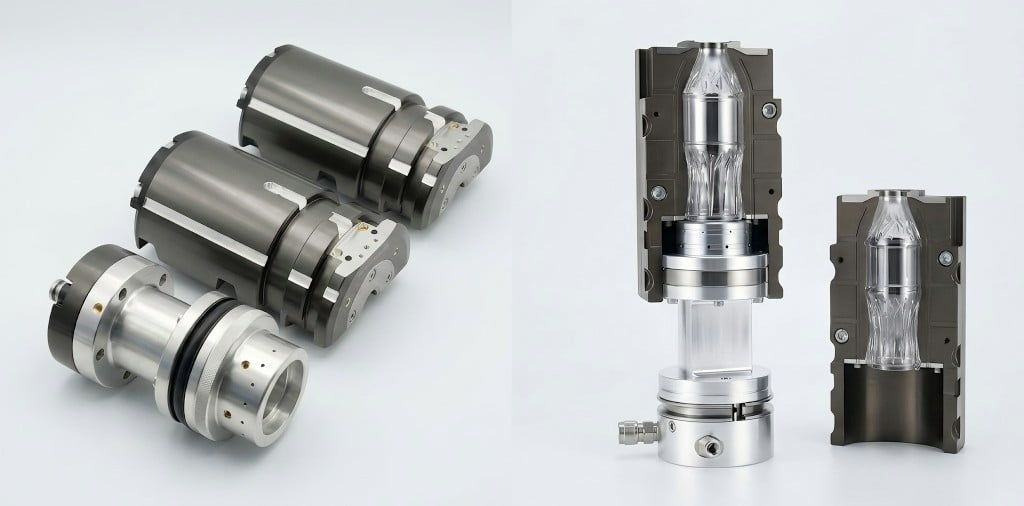
High-speed rotary molds require the superior yield strength of 7075 aluminum, recognizable by its distinct anodized color profile, to withstand continuous cam-driven clamping forces.
Conversely, linear blowing machines operate intermittently. The mold carriage pauses, closes via a toggle or pneumatic cylinder, locks, blows the bottle, opens, and then advances the preforms. The closing velocity is controlled, and the impact forces are significantly lower. For linear systems, raw aluminum or black-anodized 6061 provides more than enough structural resilience. Understanding this mechanical division is critical; using an over-engineered 7075 mold on a slow linear machine unnecessarily inflates capital expenditure without yielding proportional production benefits. For further details on machine compatibility, see our guide on why your new custom mold won't fit your blowing machine.
6. Case Study: Upgrading Linear Molds with Hard Anodizing
Upgrading standard linear molds with Type III Hard Anodizing resolves premature wear issues caused by high-pressure blowing applications. In a recent project involving heavy-wall PET containers, applying a hard anodized finish stabilized the parting line and prevented pneumatic leakage without requiring a machine upgrade.
While raw aluminum remains the standard for linear machines, exceptional engineering cases require material upgrades. Last year, I evaluated a project for a client producing 5-gallon heavy-wall PET water containers on a high-tonnage linear blowing machine. The client was experiencing frequent parting line material extrusion and pressure drops after only three months of production.
Upon analyzing their production data, we identified the root cause. Blowing a heavy-wall 5-gallon preform requires extended pre-blow times and sustained high-pressure blowing (HPB) to force the thick polymer into the mold corners. The client was using a standard raw 6061 aluminum mold. The sustained internal pneumatic pressure combined with the heavy clamping tonnage required to keep the large mold closed was causing the raw aluminum parting line to yield microscopically.
We engineered a replacement mold utilizing 7075 aluminum with full Type III Hard Anodizing. We strictly maintained the mold dimensions while altering the surface hardness and yield strength. The anodized oxide layer provided the necessary rigidity at the contact points, effectively sealing the mold under maximum pressure. The client achieved stable continuous production, proving that targeted surface treatments can optimize linear machine performance for highly demanding applications.
7. Strategic Material Pairing: Combining 7075 Aluminum with S136 Stainless Steel
Strategic material pairing combines the high thermal conductivity of anodized aluminum for the main cavity with the extreme mechanical resilience of S136 stainless steel for high-wear inserts. This hybrid engineering approach maximizes thermodynamic efficiency while protecting critical impact zones like the bottom mold.
Advanced blow mold engineering does not rely on a single material for the entire assembly. While anodized 7075 aluminum is highly resilient, certain sections of a blow mold endure specific mechanical stresses that require a different metallurgical approach. The most critical of these areas is the bottom mold (base push-up) and the neck ring inserts.
In our facility, we execute a hybrid material strategy. The main body of the mold—the left and right cavity halves—is CNC machined from 7075 aluminum and hard anodized. This maximizes heat extraction from the largest surface area of the bottle. However, for the bottom mold insert, we utilize premium S136 stainless steel hardened to 48-52 HRC.
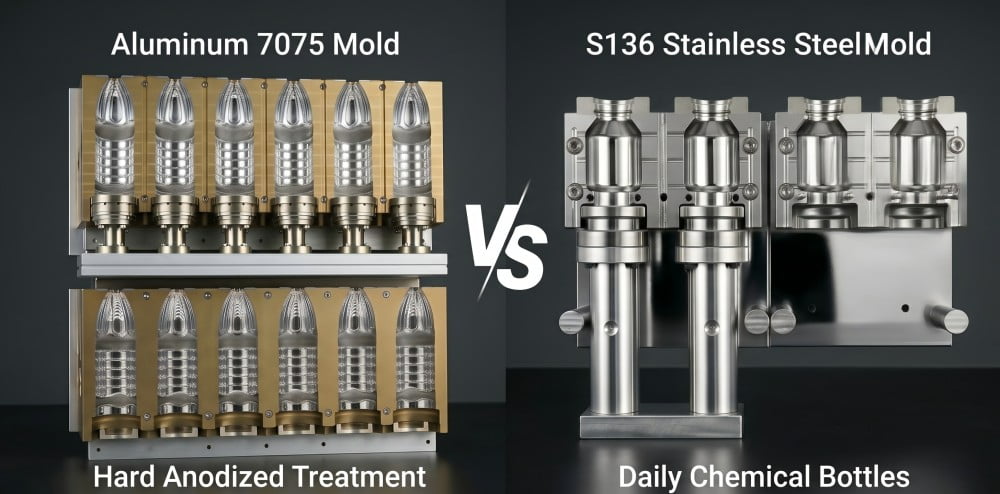
Hybrid mold construction utilizes S136 stainless steel for the bottom insert to resist mechanical wear, while the main cavities employ aluminum for optimal heat dissipation.
Why use S136 stainless steel? The bottom mold frequently actuates independently during the mold opening sequence and bears the concentrated vertical force of the stretch rod impacting the center gate of the preform. S136 stainless steel possesses exceptional natural rust prevention and allows for high mirror-polishing without needing surface treatments. It withstands the stretch rod impact and maintains the complex base geometry necessary for bottle stability. This strategic pairing places the appropriate material exactly where the physics of the blowing process demand it. If you are experiencing base formation issues, refer to our protocol on fixing center gate bulging and rocker bottoms.
| Mold Component | Engineered Material | Surface Treatment | Primary Engineering Function |
|---|---|---|---|
| Left/Right Cavity Halves | 7075 Aviation Aluminum | Type III Hard Anodizing | Rapid thermal extraction and structural rigidity. |
| Bottom Mold Insert | S136 Stainless Steel | Raw (Highly Polished) | Resists stretch rod impact; maintains complex base contours. |
| Neck Support Rings | S136 Stainless Steel | Raw (Precision CNC) | Prevents thread deformation; ensures exact preform seating. |
| Wear Plates / Guide Pins | Hardened Tool Steel | Nitriding or Standard | Ensures precise alignment during millions of closing cycles. |
8. Frequently Asked Questions (FAQs)
Q1: Why do some blow molds remain in their natural silver aluminum color?
For standard linear blow molding machines operating at standard speeds, the natural aluminum surface provides excellent heat dissipation and sufficient durability. Bypassing the hard anodizing process keeps manufacturing costs lower and delivery times shorter, making it a highly cost-effective choice for standard daily production schedules.
Q2: What causes the exact difference between the black and yellow mold surfaces?
The color difference originates from the specific aluminum alloy grade reacting to the electrochemical hard anodizing process. The black color indicates 6061 aluminum, offering moderate standard wear resistance. The yellow or golden finish is the natural chemical result of hard anodizing 7075 aviation-grade aluminum, which signifies superior structural strength required for high-speed rotary machines.
Q3: Does the black or yellow hard anodizing layer fade or peel off over time?
No. Hard anodizing is an electrochemical process that converts the surface of the aluminum into a highly durable aluminum oxide layer; it is not an applied paint or coating. It integrates completely with the base metal lattice, meaning it will not peel off, though microscopic mechanical wear naturally occurs after millions of production cycles.
Q4: If I purchase a natural aluminum mold now, can I have it anodized locally later?
This practice is highly discouraged. The hard anodizing process adds a microscopic layer of thickness (typically 25 to 50 microns) to the mold's surface. If a finished, high-precision natural aluminum mold is anodized post-manufacturing, this slight dimensional increase alters the strict tolerances of the parting line and locking mechanisms, which frequently leads to visible parting line extrusion or pneumatic leakage during blowing.
Q5: Why do you recommend using S136 stainless steel inserts with anodized aluminum molds?
While anodized 7075 aluminum offers excellent thermal conductivity and surface hardness, certain critical high-wear areas, such as the bottom mold, require targeted mechanical resistance. Premium S136 stainless steel provides exceptional natural rust prevention and allows for high mirror-polishing without needing surface treatments, ensuring maximum dimensional stability for the most mechanically stressed parts of the mold.
Conclusion: Balancing Cost, Craftsmanship, and Mold Longevity
Since the establishment of our mold workshop in 2004, cross-border factory operations have consistently demonstrated that tooling success relies on aligning metallurgical properties with machine dynamics. There is no universally applicable material; there is only the appropriate engineering match. Utilizing untreated aluminum is highly logical for standard linear machines, prioritizing thermal efficiency and cost. Deploying black-anodized 6061 aluminum adds a necessary layer of abrasion resistance for demanding environments. However, for continuous, high-speed rotary production, the yellow anodized finish of 7075 aviation aluminum remains the mandatory standard to prevent parting line failure under extreme mechanical stress.
By strategically integrating S136 stainless steel at high-impact points, we construct molds that sustain strict dimensional tolerances across their lifecycle. I encourage overseas buyers to evaluate their blowing machine's clamping mechanism and production speed before finalizing material specifications. If you require a technical evaluation of your current blow mold schematics or material selection, send us your equipment parameters, and we will engineer a precise tooling strategy.
Related Technical Guides:
- Looking for a Preform Mould Maker in China? 5 Ways to Spot a Trader vs. a Real Factory
- Why Are Most PET Blow Molds Made of Aluminum? 4 Engineering Reasons Explained
- PET Blow Mold Preventive Maintenance: A Complete Guide for Aluminum and Stainless Steel Tooling
- Custom Blow Molds: 4 Reasons Your New Mold Won't Fit Your Blowing Machine
- Comprehensive Analysis: How Much Does a PET Blow Mold Cost?