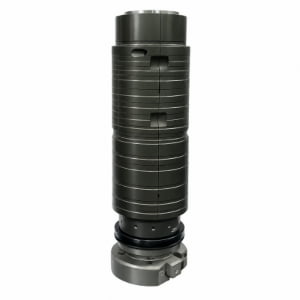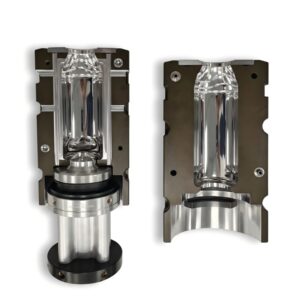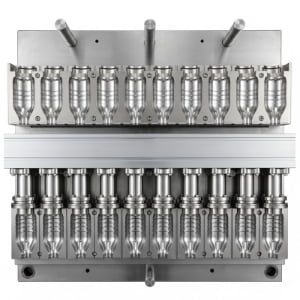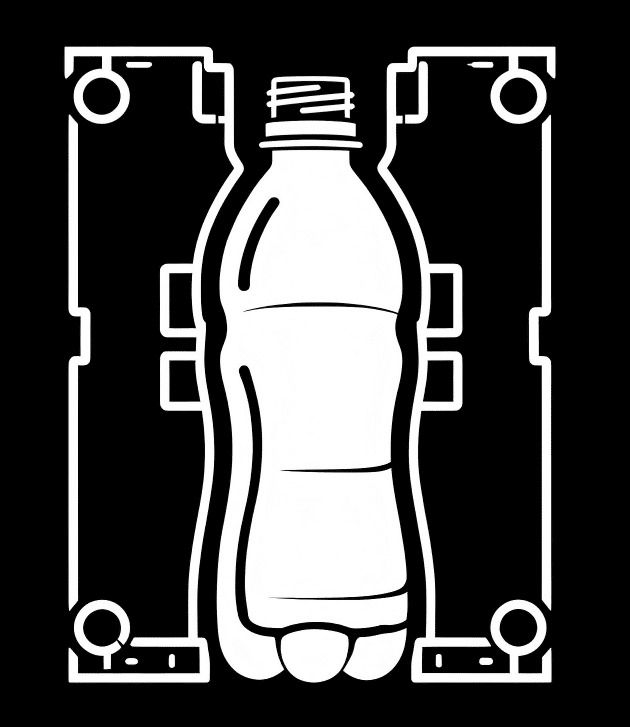
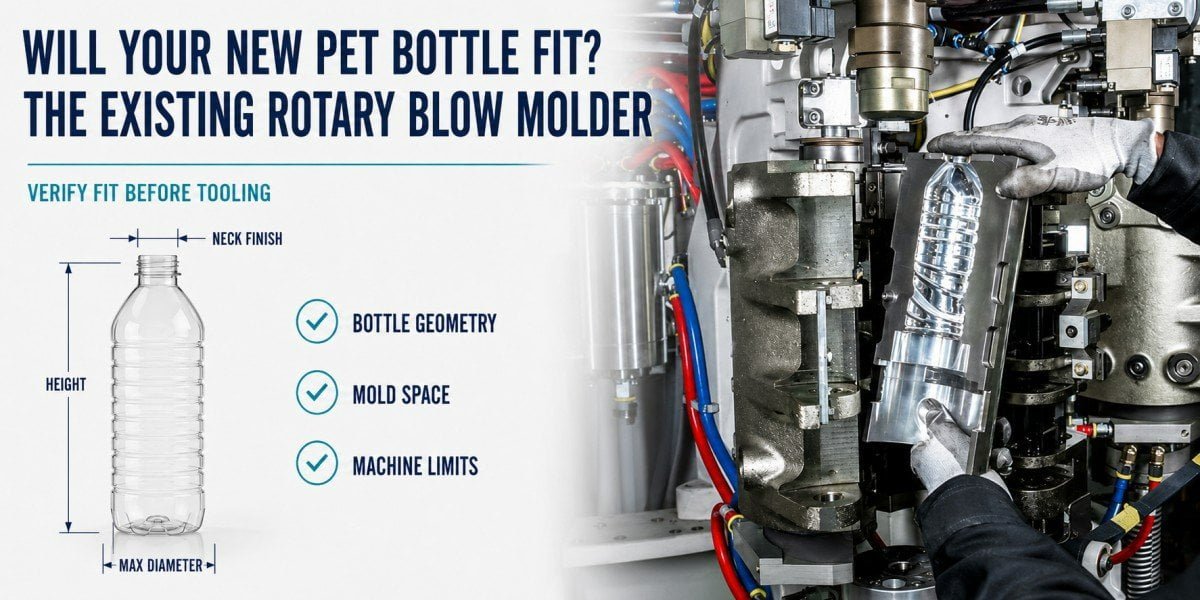
A Saudi customer recently came to us with a new PET bottle project. His factory already had a Sidel SBO 10 blow molding machine and had mainly been producing PET bottles in the 300–500ml range. This time, he wanted to add a much larger water bottle and initially planned a 1.5L design.
We did not immediately start manufacturing the blow mold.
Before machining, we compared the proposed bottle geometry with the customer’s existing machine configuration. During that review, we found that the problem was not the 1.5L volume itself. The particular 1.5L bottle had been designed with a tall, slender proportion, and its final bottle height exceeded the usable height available on that customer’s existing SBO 10 configuration.
If we had discovered this after CNC machining, the customer could have faced bottle redesign, mold modification, or even replacement tooling.
Instead, we discussed the limitation during the bottle-design stage. The bottle proportions and commercial requirement were reconsidered, and the project was eventually adjusted from 1.5L to 1.25L so that the new bottle could remain within the practical geometry available on the customer’s existing production equipment.
This project illustrates one of the most important rules we use when evaluating a new bottle for an existing blow molding line:
Bottle volume does not determine whether a bottle fits a blow molder. Bottle geometry does.
A 1.5L bottle is not automatically too large for a Sidel SBO 10. In fact, Sidel’s current EvoBLOW Regular information shows different SBO configurations covering different container-size ranges, which is exactly why machine generation, configuration, and bottle design must be evaluated together rather than using a single volume number as the limit.
The actual question is:
Will this specific bottle geometry fit and operate correctly inside this specific blow molding machine?
For customers developing replacement PET blow molds for existing Sidel, Krones, KHS, or other rotary blow molders, answering that question before the bottle drawing is frozen can prevent a much more expensive problem later.
Why Bottle Volume Alone Cannot Determine Blow Molder Compatibility
Bottle volume tells us how much liquid a PET bottle holds, but it does not tell us whether the bottle will physically fit an existing blow molding machine. Two bottles with the same nominal capacity can have very different heights, diameters, shoulders, bases, and mold-space requirements.
When customers first discuss a new bottle project with us, capacity is usually one of the first pieces of information they provide.
“We need a 500ml bottle.”
“We want to add a 1L format.”
“We want to develop a 1.5L water bottle.”
That information is necessary, but from a blow mold engineering perspective, it is only the beginning.
Consider two 1.5L water bottles.
One may have a relatively wide body and short shoulder. Another may have a narrow diameter, long straight body, and extended shoulder because the brand wants a taller appearance on the retail shelf.
Both bottles contain 1.5 litres.
But mechanically, they can be very different products.
The second bottle may require significantly more vertical space inside the blow station, while the wider bottle may be more demanding in the radial direction. Their blow molds will also have different cavity dimensions, cooling layouts, and working envelopes.
This is why we do not look at a machine and simply say:
“It produces 1.5L bottles, so your new 1.5L design will fit.”
That conclusion is too early.
Even current Sidel blowing equipment is specified according to combinations of container size and machine configuration rather than one universal volume limit for every SBO model. Sidel’s EvoBLOW Regular information, for example, lists different SBO configurations across different bottle-size ranges and also notes that maximum output depends on bottle features.
The principle matters more than the individual specification:
A bottle can be within an expected volume range and still be too tall, too wide, or otherwise unsuitable for the actual blow station.
This is particularly important when a factory has spent years producing one family of bottle sizes and then suddenly wants to move into a substantially different format.
In our Saudi customer’s case, the factory had mainly been running 300–500ml bottles. Moving toward 1.5L was not simply a matter of installing a larger cavity.
The new geometry had to be checked against equipment that already existed.
That compatibility review should happen while the bottle can still be changed easily—not after the aluminum has already entered the CNC machine.
Which Bottle Dimensions Should Be Checked Before the Mold Is Designed?
Before a new PET bottle design is frozen, we need to understand its real dimensions rather than relying on nominal volume. Bottle height, under-neck height, maximum body width, shoulder profile, base geometry, and their relationship with the mold all influence whether the design can operate within the available blow station.
From our manufacturing experience, the easiest mistake is to treat the bottle drawing as a packaging-design document first and a machine component second.
The designer starts with the brand appearance.
The customer chooses a target capacity.
The body becomes taller to look more premium. The shoulder becomes longer to create a slimmer silhouette. The base diameter is adjusted for shelf appearance.
Individually, each change may look reasonable.
But the bottle is gradually becoming a physical object that must operate inside an existing machine.
This is where we need to bring blow mold engineering into the project.
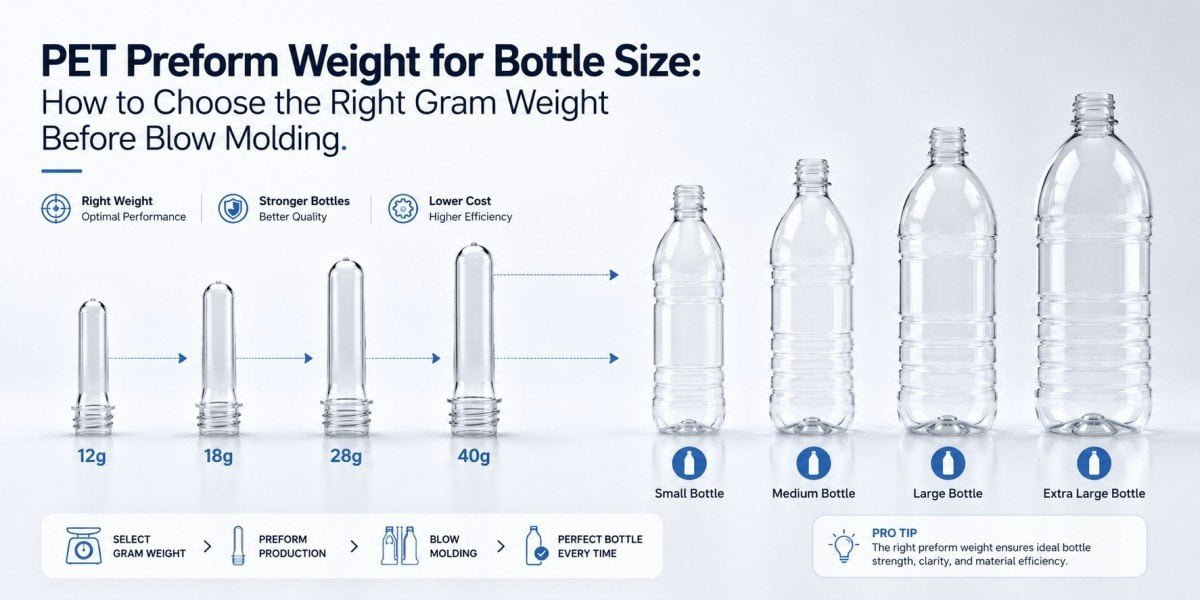
When we receive a preliminary 3D bottle design, one of the first things we do is relate the bottle dimensions to the existing production platform.
Height is important because the bottle needs sufficient axial working space.
Width matters because the finished bottle is only the inside geometry of the mold. The mold itself requires additional material and mechanical structure around that bottle.
Shoulder shape matters because it influences both the mold cavity and bottle release.
The bottom also occupies its own functional space. Depending on the machine and mold design, the base insert and its movement must remain compatible with the available station geometry.
The key point is that these dimensions should be evaluated together, not as isolated maximum numbers.
For example, a tall bottle that is comfortably within the radial space of the station can still fail the overall feasibility check because of its vertical geometry.
A relatively short bottle may satisfy the height requirement but become impractical because the body is too wide for the available mold envelope.
And an irregular bottle can create release or tooling issues even when its maximum overall dimensions initially appear acceptable.
This is why bottle development should not follow this sequence:
Design the bottle → approve the appearance → finish the 3D → order the mold → check the machine.
We prefer:
Develop the bottle concept → check the machine geometry → refine the bottle → freeze the 3D → design the mold.
Our article on How to Develop a 500ml PET Bottle: The Step-by-Step Timeline Guide explains this broader relationship between bottle development and tooling.
The rule for an existing production line is simple:
Bottle dimensions should be checked against the machine before the bottle appearance is frozen.
Why Does Bottle Height Often Become the Hidden Limit on a Rotary Blow Molder?
Bottle diameter is an obvious concern, but bottle height can become the first practical limit when a new design is made taller and slimmer. The complete bottle must fit the axial working space required for blowing, mold operation, base formation, opening, and subsequent transfer.
When a customer asks whether a larger bottle will fit an existing machine, the first instinct is often to think about diameter.
That is understandable.
If the bottle is visibly much wider, it is easy to imagine the mold becoming too large for the station.
Height is less obvious.
A designer may add 10mm here, extend the shoulder by another 15mm there, or stretch the body proportion slightly because the bottle looks better when it is taller.
On a computer screen, these changes appear small.
Inside an existing rotary blow molder, they can be important.
The machine already has a defined mechanical architecture. The preform has to be positioned at the correct level. The stretch rod must complete its movement. The mold and base system must create the complete bottle geometry. The mold then has to open and the finished container has to leave the station.
All of those operations happen inside finite physical space.
For this reason, a bottle being only 20 or 30mm taller can sometimes matter more than adding several hundred millilitres of nominal volume.
That does not mean 20mm or 30mm is a universal tolerance or machine limit. There is no such general rule.
It means that when a design is already approaching the usable boundary of a specific machine configuration, apparently modest geometric changes can determine whether the project remains feasible.
Our Saudi project is a good example.
The customer initially thought in terms of capacity:
300–500ml production today, 1.5L new product tomorrow.
When we reviewed the project, however, capacity was not the dimension that stopped the design.
Bottle height was.
The planned 1.5L water bottle had been given a proportion that required more vertical room than the customer’s actual machine configuration could provide for that project.
This is why we always distinguish between:
“Can this machine produce a bottle of approximately this capacity?”
and:
“Can this machine produce this exact bottle drawing?”
Those are not the same question.
Why Bottle Diameter and Mold Space Must Be Evaluated Together
The finished bottle diameter is not the same as the space required by the blow mold. The machine must accommodate the complete working mold around the bottle, including the cavity structure, mold material, cooling system, interfaces, and movement required by the station.
Another common question we receive is:
“My bottle diameter is below the machine limit, so the mold should fit, correct?”
Not necessarily.
The bottle exists inside a mold cavity.
Outside that cavity, the mold still requires structural material. It needs sufficient wall thickness for machining and repeated production. Cooling passages have to be placed around relevant bottle regions. There are machine interfaces, mounting areas, and the mechanical structure required by the specific blow molding platform.
Therefore, if a customer sees an available machine dimension, that entire dimension cannot automatically be assigned to the finished bottle.
The machine must accommodate the complete working mold—not only the finished bottle dimensions.
This becomes even more important when bottle geometry is not a simple round cylinder.
A square PET bottle may have corners extending toward the mold limits.
An oval bottle distributes its required space differently along two axes.
A bottle with strong panels, handles, grips, or pronounced shoulder features may occupy space differently again.
Even two bottles with similar maximum widths can require different mold solutions because their local geometry is not the same.
This is one reason we ask for the complete 3D or engineering drawing rather than only:
“Maximum bottle diameter: XX mm.”
That number is useful, but we still need to see where that width occurs and how the rest of the bottle develops around it.
The same principle applies to replacement blow molds.
PETMOLDER already discusses the broader mechanical issue in Custom Blow Molds: 4 Reasons Your New Mold Won’t Fit Your Blowing Machine. In the current article, however, the emphasis comes one stage earlier:
Can we adjust the bottle itself before we create a mold that is difficult or impossible to run?
That is a much cheaper question to answer.
Why Mold Opening and Bottle Removal Matter as Much as the Closed Mold Size
A new bottle is not compatible with a rotary blow molder merely because the closed mold fits inside the station. The machine also has to open the mold, release the finished bottle, complete the base movement, and transfer the container during continuous production. Compatibility is therefore a dynamic-space problem, not a static CAD measurement.
This is one of the areas where practical mold experience becomes important.
If we place a new cavity into a CAD assembly and see that the closed mold fits within the available station space, that is useful information.
But it is not the complete feasibility check.
A rotary blow molding machine operates continuously through a sequence.
The mold closes around the preform. Stretch blowing takes place. The bottle takes the cavity shape. The mold and base mechanism then move to release the container, and the finished bottle is transferred away before the station begins its next cycle.
The bottle therefore has to fit not only while everything is closed, but also while these mechanical movements happen.
This can become important when a bottle has a particularly wide shoulder, strong local protrusions, an unusual body profile, or another geometry that influences release.
A design may look perfectly reasonable in a single cross-section while becoming much less comfortable when we simulate how the two mold halves separate from the finished bottle.
We have the same concern when customers develop unusually shaped PET bottles.
The question is not only:
“Can we machine this cavity?”
It is also:
“Can the bottle leave this cavity normally in the actual machine?”
That distinction is one of the reasons the type of blowing machine matters.
A semi-automatic mold, linear automatic mold, and high-speed rotary blow mold do not all use identical mechanical interfaces or movement. PETMOLDER’s article on Semi-Auto vs. Fully Auto PET Blow Molds and Mechanical Compatibility explains those platform differences in more detail.
For a new rotary bottle project, the important principle is:
Machine compatibility should be checked through the complete mold movement, not from one static CAD section.
Saudi Arabia Case: Why a Planned 1.5L Bottle Was Redesigned to 1.25L for an Existing Sidel SBO 10
Our Saudi customer’s project shows why machine compatibility should be checked before CNC machining. The original 1.5L capacity was not inherently incompatible with every SBO 10; the specific tall bottle geometry was incompatible with the usable height available on this customer’s existing machine configuration.
This is a real project from our work, and it is probably the clearest way to explain the entire article.
The customer is in Saudi Arabia and already had a Sidel SBO 10 blow molding machine.
His existing production was mainly focused on approximately 300–500ml PET bottles. The factory wanted to expand the product range with a larger water bottle, and the initial target was 1.5L.
At this stage, it would have been easy for us, as the mold supplier, to take the 1.5L design and proceed directly to tooling.
But we did not want to determine machine compatibility from capacity alone.
We checked the bottle design against the customer’s actual production equipment before the mold was manufactured.
That review showed that the new design was very tall.
The customer wanted a particular bottle proportion, and as the design developed toward 1.5L, the required final bottle height moved beyond the practical usable height available in his existing SBO 10 configuration.
This point is important:
The problem was not that “Sidel SBO 10 cannot produce a 1.5L bottle.”
That would be an incorrect conclusion.
Sidel’s current published EvoBLOW Regular information itself shows SBO configurations associated with multiple container-size ranges; for example, different configurations are listed for containers up to 2L and up to 3.5L. This demonstrates why the specific machine platform and bottle design have to be considered rather than applying one capacity limit to every machine carrying an SBO designation.
Our customer’s problem was much more specific:
this particular 1.5L bottle geometry exceeded the usable height of this particular existing machine configuration.
That difference matters.
If the 1.5L bottle had been designed with another diameter-to-height proportion, the feasibility question could have been different.
If the customer had another SBO generation or another machine configuration, the conclusion could also have been different.
We therefore did not tell the customer:
“Your machine cannot make 1.5L bottles.”
We told him that the current 1.5L design could not be used as planned on his existing setup without changing something in the project.
We then discussed the packaging design rather than waiting for a machine problem to appear after tooling.
The bottle was redesigned and the capacity was eventually adjusted to 1.25L. This allowed the new format to return to a geometry that was more appropriate for the customer’s existing production conditions while still giving him the larger water-bottle product he wanted.
Only after that compatibility issue was resolved did the project continue toward final mold development.
This is the part of the project that, in our opinion, created the most value for the customer.
It was not CNC machining.
It was identifying a conflict before CNC machining started.
Once a blow mold has already been manufactured, geometric changes become much more expensive. A bottle height change can affect much more than one small insert. Depending on the change, the shoulder, body, base relationship and complete cavity may need to be reconsidered.
Before machining, the same problem is still mainly a design decision.
That is why we consider machine compatibility checking part of our blow mold engineering work rather than something the customer should discover during commissioning.
Compatibility checking before mold manufacturing prevented this project from discovering the problem after the tooling had already been machined.
Should You Modify the Bottle Design or Modify the Existing Machine?
When a new bottle falls outside the practical working range of existing equipment, the first option should usually be to evaluate whether the bottle geometry can be optimised within the current machine window. Machine modification becomes the next question when the packaging requirement cannot reasonably change.
Finding that a bottle does not fit is not the end of a project.
It simply creates a design decision.
The first possibility is to revise bottle proportions.
For example, if height is the limiting factor but some additional radial space is available, the designer may be able to develop a slightly wider and shorter bottle while maintaining the target capacity.
Whether that is practical depends on the bottle, label area, shelf appearance, packaging arrangement, blowing behaviour, and commercial requirements.
Another possibility is to change the target volume slightly.
That is what happened in our Saudi project.
The customer had initially planned 1.5L, but after reviewing what could be achieved comfortably with the existing machine and preferred bottle appearance, the project was adjusted to 1.25L.
That was a commercial decision as much as an engineering one.
The third possibility is to keep the bottle unchanged and investigate the machine.
Depending on the machine platform and the exact limiting factor, there may sometimes be conversion or modification possibilities. But this needs to be discussed with appropriate machine engineering information and should never be assumed.
If the required container lies outside a fundamental mechanical capability of the installed platform, then another machine or another production arrangement may eventually become the correct investment decision.
The order matters.
From a customer’s investment perspective, we would normally prefer:
First optimise the bottle within the existing machine window. Then evaluate machine modification only if the packaging requirement cannot change.
There is little value in modifying production equipment if a modest bottle-design adjustment can achieve the same commercial objective.
At the same time, there is also little value in forcing the bottle into an unattractive or technically weak design simply to avoid discussing the machine.
The correct solution depends on which requirement is truly fixed.
Why Existing Production History Does Not Prove a New Bottle Will Fit
A machine successfully producing one bottle family does not automatically prove that a larger or differently proportioned bottle can use the same format space. Existing production is a useful reference, but compatibility still has to be checked against the geometry of the proposed bottle.
Our Saudi customer’s previous production is a good example.
The machine was already successfully producing approximately 300–500ml bottles.
That told us the equipment was operational and gave us valuable information about the current mold and bottle formats.
But it did not prove that the proposed 1.5L bottle would fit.
There was too large a geometry change to make that assumption.
The same situation appears in other factories.
A customer may already produce 1L and ask whether 1.5L can be added.
Or a factory may produce a short 2L bottle and assume that another 2L bottle from a different brand can use the same machine window.
In each case, the existing bottle is a useful reference model.
We can compare its height, diameter, mold structure and preform with the proposed bottle.
But we cannot replace the compatibility calculation with a volume comparison.
This also explains why the topic is different from simply asking whether one machine can cover several nominal capacities.
PETMOLDER’s article Can You Produce 5L, 10L, 15L, and 20L PET Bottles on a Single Blowing Machine? looks at a much broader multi-format machine-selection question.
Here, we are asking something more specific:
Before developing one new bottle for one existing rotary blower, does the actual bottle geometry fit the equipment you already own?
That is a design-stage question.
Why the Machine Model and Actual Configuration Still Matter
For replacement blow mold projects, the machine brand alone is not enough. The specific model, generation, and actual production configuration determine the space and tooling interfaces that the new bottle must work within.
Customers sometimes send an inquiry that says:
“We use Sidel.”
Or:
“The machine is SBO 10.”
That is a useful start, but before final tooling design we still want more information.
Sidel has produced many generations and configurations of SBO equipment over decades. Sidel itself notes that more than 7,000 SBO blowers have been installed worldwide, illustrating the scale and long development history of the platform.
Current EvoBLOW equipment also covers multiple configurations and bottle-size categories rather than one universal geometry for every machine.
In real factories there is another complication: machines change over time.
A production line may have been retrofitted. Components may have been upgraded or replaced. The existing molds may use specific interfaces developed for that factory.
Therefore, when we manufacture a replacement rotary blow mold, we prefer to work from the actual machine rather than only a model name.
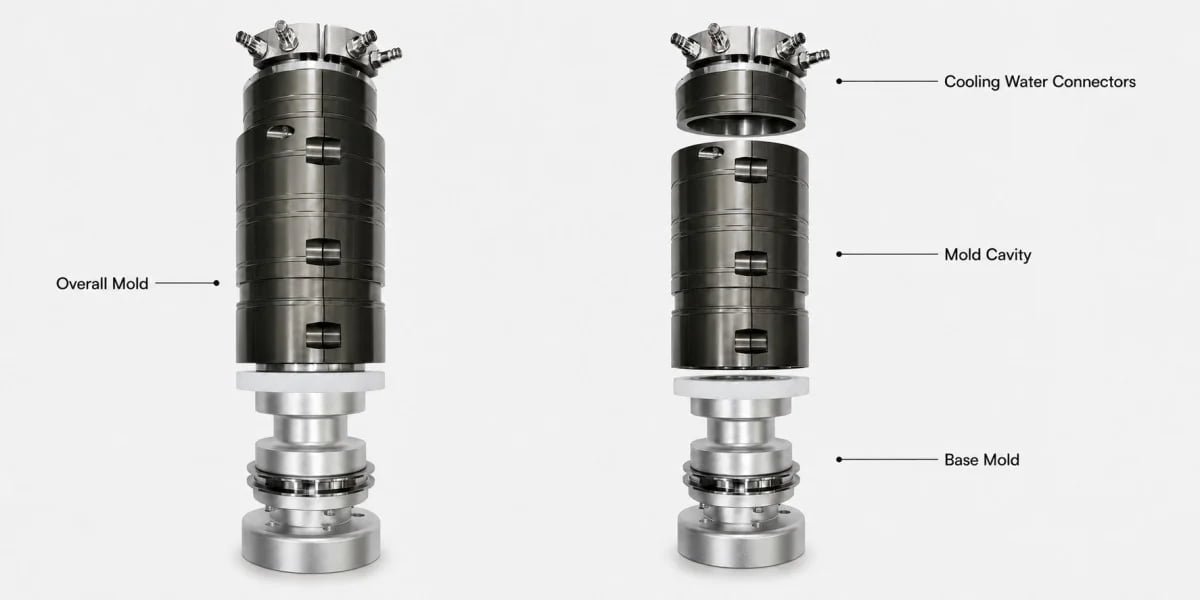
Machine nameplate information, photographs of the existing tooling, existing mold drawings where available, and actual dimensions are valuable.
For high-speed rotary tooling, this is particularly important because the mold is not a generic aluminum block.
It has to fit the station, locking arrangement, base system, cooling interface and production requirements of the actual equipment.
PETMOLDER discusses this in more detail in High-Speed Rotary Blow Molds for Krones & Sidel: A Guide to Premium Compatible Tooling.
The principle is the same as our bottle-volume discussion:
Do not design from a label alone. Design from the actual geometry and actual machine.
What Should Be Checked Before Freezing a New Bottle and Ordering the Blow Mold?
For a new bottle on an existing rotary blower, machine compatibility should be confirmed before the bottle drawing and blow mold are frozen. We first identify the actual production equipment, then evaluate the proposed bottle geometry and existing format before moving into preform selection and final tooling design.
When we receive this type of project, the best starting point is the machine.
We want the exact brand and model, but if the equipment is older or has been modified, the actual running configuration is even more important.
After that, we look at what the factory is already producing.
An existing bottle and mold provide useful reference geometry. They show us what is currently working in the station and give us a practical baseline for the new design.
Then we review the proposed bottle.
At this stage, we care much more about the engineering drawing or 3D model than the statement:
“It is a 1.5L bottle.”
We compare height, width, shoulder, bottom, mold envelope and the movement required to produce and release the bottle.
If the design is still at the concept stage, this is an advantage rather than a problem.
It means changes are still inexpensive.
We can tell the customer that the bottle is becoming too tall, that more radial space may be available, or that a local feature should be reconsidered before the packaging appearance is officially approved.
Once the bottle geometry is confirmed against the machine, we can continue with preform selection, stretch relationship, material distribution, cavity engineering, cooling and formal blow mold design.
This sequence is particularly important when the customer is moving far outside the bottle family normally produced on the machine.
The earlier the compatibility check happens, the more design freedom remains.
The later it happens, the more the project becomes a tooling-modification problem.
For us, the project principle is:
Check the machine first. Freeze the bottle second. Manufacture the blow mold third.
FAQ
Can bottle volume tell me whether a new PET bottle will fit my blow molding machine?
No. Bottle volume tells you the internal capacity, not the complete external geometry. Two bottles with the same volume can have very different heights, diameters, shoulders, and base structures. The final bottle drawing must therefore be compared with the actual blow molding machine and mold space before compatibility can be confirmed.
Can a 1.5L PET bottle run on a Sidel SBO 10?
It depends on the specific SBO 10 configuration and the actual 1.5L bottle geometry. A universal yes or no would be misleading. Sidel’s current EvoBLOW Regular information shows different SBO configurations associated with different bottle-size ranges, confirming that machine configuration matters.
In our Saudi project, the customer’s particular 1.5L design was too tall for the usable space of his existing SBO 10 configuration, so we redesigned the project to 1.25L. This does not mean all SBO 10 machines are unable to produce 1.5L bottles.
What happens if the bottle is too tall for the existing rotary blow molder?
If the bottle geometry exceeds the available axial working space, simply “making the mold shorter” does not solve the problem because the bottle itself requires that height. The project should first evaluate whether the bottle proportions or target capacity can be adjusted. If the bottle requirement cannot change, then the feasibility of modifying or changing the production equipment must be evaluated separately.
Should machine compatibility be checked before or after the bottle design is finished?
Ideally, it should be checked before the bottle design is completely frozen. The aesthetic concept can be developed first, but when a project significantly changes bottle height, diameter, capacity, or proportions, an early machine-compatibility review can prevent the design from reaching prototyping or mold manufacturing before a physical limitation is discovered.
What information should I send before ordering a blow mold for an existing rotary blower?
Start with the exact blow molding machine model and its actual production configuration, together with the new bottle engineering drawing or 3D data. Existing blow mold information, current bottle drawings, preform drawings, machine-nameplate photographs, cavity number, cavity pitch, and required production output can help us compare the proposed bottle with what is already running successfully on the machine.
Conclusion
Our Saudi customer’s project started with a simple request:
A factory that mainly produced 300–500ml PET bottles wanted to add a 1.5L water bottle on an existing Sidel SBO 10.
If we had treated that as only a mold-manufacturing order, we could have received the drawing, machined the mold and discovered the machine limitation much later.
Instead, we checked the bottle geometry first.
The proposed 1.5L design was too tall for the usable height of that customer’s existing machine configuration. We discussed the problem while the bottle was still being developed, and the final project was adjusted to 1.25L before mold manufacturing continued.
That is what machine compatibility engineering should do.
It should identify the problem when it is still a CAD change—not after it has become a CNC, tooling and production problem.
And the lesson from this case is not:
“Sidel SBO 10 cannot make 1.5L bottles.”
The lesson is:
Bottle volume does not determine whether a bottle fits a blow molder. Bottle geometry does.
For a new PET bottle on an existing Sidel, Krones, KHS, or other rotary blower, we recommend confirming the actual machine configuration and checking the bottle geometry before the final design is approved.
If you are developing a new bottle for an existing production line, you can send PETMOLDER the machine model and nameplate, current mold information, current bottle and preform drawings, new bottle drawing or 3D model, cavity number, cavity pitch, and required output.
We can compare the proposed bottle with the actual blow station before tooling begins and determine whether the bottle design should remain unchanged or be optimised for the equipment you already own.
Check the machine first. Freeze the bottle second. Manufacture the blow mold third.
Related PETMOLDER Articles
- Custom Blow Molds: 4 Reasons Your New Mold Won’t Fit Your Blowing Machine
- Can You Produce 5L, 10L, 15L, and 20L PET Bottles on a Single Blowing Machine?
- High-Speed Rotary Blow Molds for Krones & Sidel: A Guide to Premium Compatible Tooling
- Semi-Auto vs. Fully Auto PET Blow Molds and Mechanical Compatibility
- How to Develop a 500ml PET Bottle: The Step-by-Step Timeline Guide